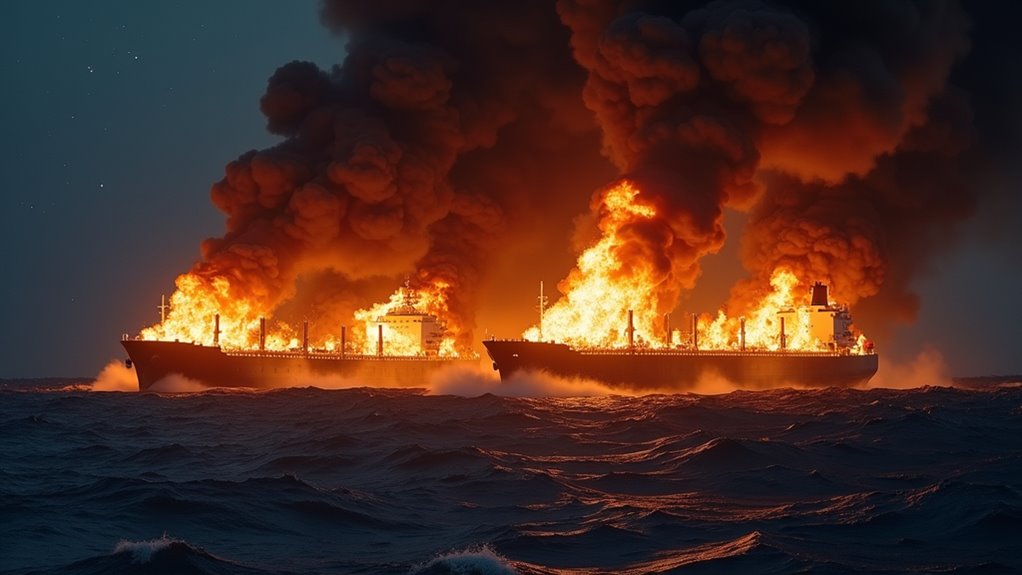

Design Highlights
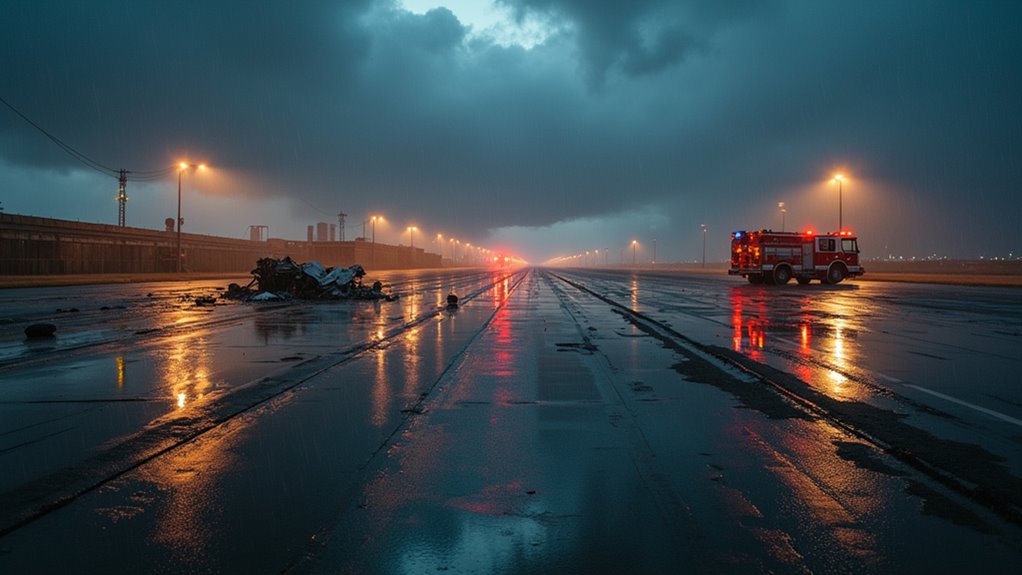
- External impacts, such as collisions, can trigger explosive fires on oil tankers, resulting in catastrophic incidents.
- The presence of volatile cargo vapors in tanks heightens the risk of ignition after an external impact.
- Double-hull tankers, though safer, still face significant fire risks from external forces like collisions or groundings.
- Aging vessels with poor maintenance are more susceptible to accidents and can exacerbate the effects of external impacts.
- The aftermath of such impacts includes severe environmental damage and serious casualties among crew members.
Oil Tankers on Fire
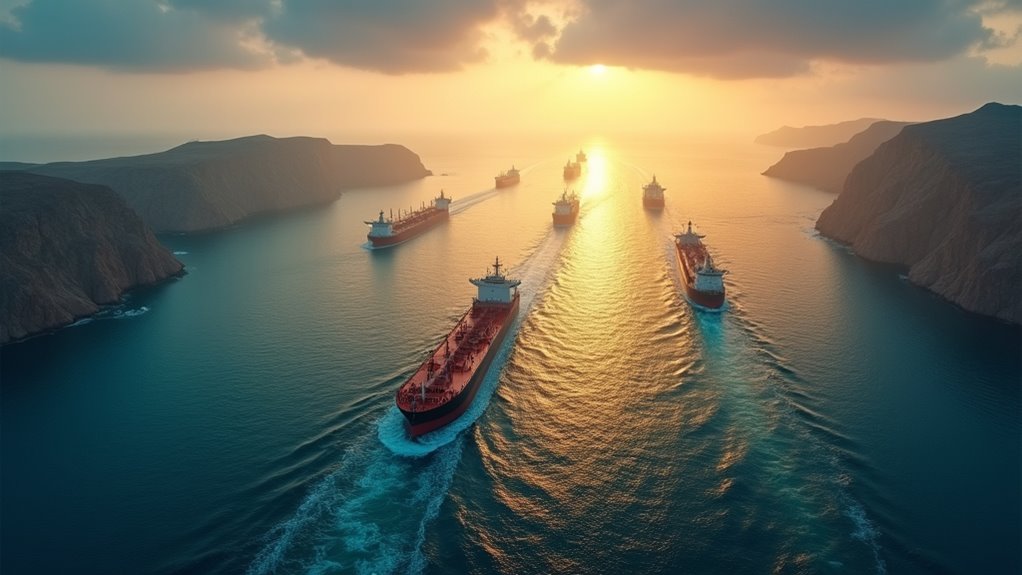
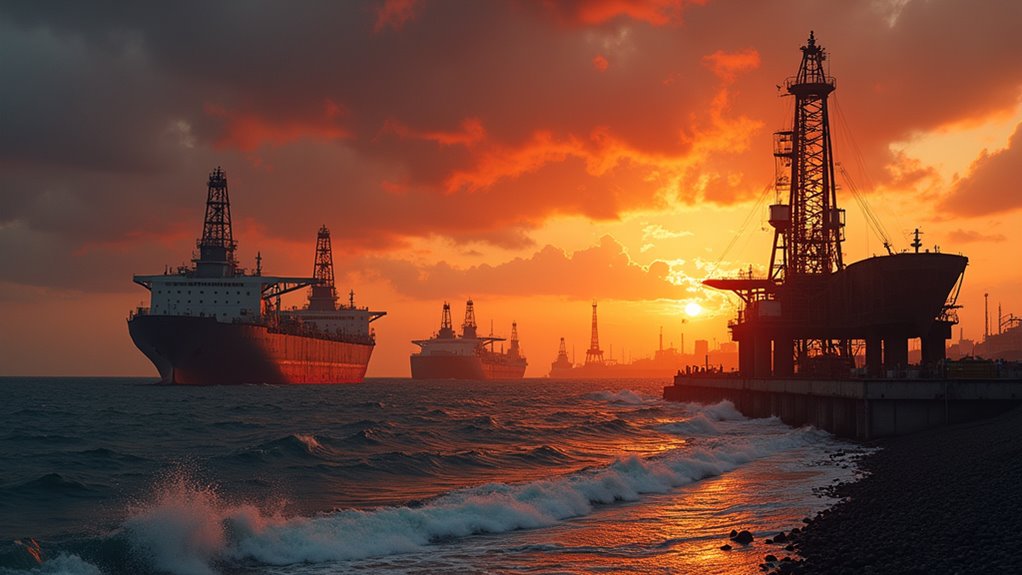
Oil tankers on fire? It’s a nightmare scenario that unfolds more often than one might think. Between 1970 and 2024, fire and explosions accounted for a staggering 11% of large oil tanker spills worldwide. How do these fiery disasters happen? A cocktail of equipment failure, human error, and good old-fashioned collisions often lead to chaos.
For instance, during production operations, explosions can erupt due to equipment malfunctions or simple operational blunders. And let’s not forget the leaks—those pesky cargo oil spills and vapors that can ignite a fireball inside the cargo tanks.
Collisions are the heavyweight champions of oil tanker accidents, responsible for a whopping 30% of spills, with groundings adding another 31% to the tally. One minute, a vessel is gliding across the waves, and the next, it collides with something stationary or even another ship. Boom! Fire ensues, often triggered by the impact. It’s like a bad action movie, except the explosions are very real and very dangerous.
Collisions are the leading cause of oil tanker spills, igniting fiery chaos in an instant.
From 1980 to 2013, there were 88 fires and explosions on large tankers identified globally. Out of those, 17 incidents resulted in serious casualties. Even double-hull tankers, which are designed to offer a bit more protection, still faced serious fire incidents. Unintentional grounding accounts for 31% of oil spills, highlighting just how critical it is to ensure navigational safety.
Yes, they’re safer, but they’re not invincible. There’s a rate of about 3.9 serious fires or explosions per 10,000 tanker years for these supposedly safer vessels. That’s comfortingly low, but still, it’s a risk.
The damage from these incidents isn’t limited to just the ships. The human and environmental toll is devastating. Oil spills wreak havoc on marine ecosystems, while the toxic smoke from fires poses serious health risks to crews, first responders, and anyone unlucky enough to be nearby. When crew members are injured in these catastrophic events, workers’ compensation insurance typically covers their medical expenses and lost wages regardless of fault.
Long-term effects? Oh, they’re a given. Fires can also lead to significant economic losses and casualties.
What about the risk factors? Volatile cargo vapors inside tanks can spell disaster, especially if there’s an external impact. The age and maintenance of a tanker play a huge role in how it handles such situations.
Sure, double-hulls offer some protection, but they’re not a magic shield against fire. In the end, it’s a messy business, with risk lurking at every corner.