
Design Highlights
- Fast e-commerce delivery increases the number of delivery vehicles, contributing to a projected 21% rise in traffic congestion by 2030.
- Last-mile deliveries are responsible for half of e-commerce’s total carbon emissions, with logistics expected to emit 25 million metric tons of CO₂ by 2030.
- The pressure to deliver quickly raises the likelihood of accidents, endangering both delivery drivers and other road users.
- Delivery drivers often work under stressful conditions, leading to high injury rates and insufficient workers’ compensation coverage for injured drivers.
- E-commerce generates significantly more packaging waste than traditional retail, with 8 million tonnes of plastic entering oceans annually, harming marine life.
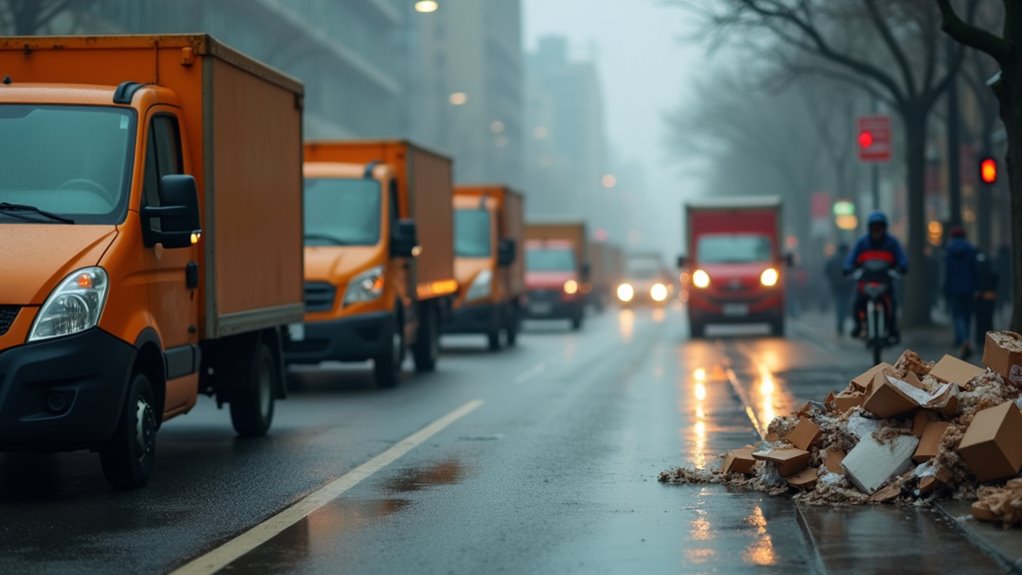
How fast is too fast when it comes to e-commerce delivery? In a world where same-day delivery is the norm, the consequences are piling up. Delivery vehicles are expected to increase by a staggering 36% in major cities by 2030. That’s a lot of vans and trucks clogging up the streets. If this surge in traffic goes unchecked, congestion could rise by over 21%. Imagine rush hour, but worse.
More delivery trucks mean longer travel times and more idling emissions. That’s right—while you’re enjoying your speedy orders, the air is getting thicker with pollution.
Speaking of pollution, let’s talk about carbon emissions. Last-mile deliveries alone account for half of the total emissions. Fast delivery services often fill their trucks at half capacity—brilliant, right? More trips, more emissions. This inefficiency contributes to the fact that last-mile deliveries are the most energy-intensive segment in e-commerce last-mile deliveries. Interestingly, e-commerce sales value rose from USD 17 trillion in 2016 to USD 27 trillion in 2022, reflecting the surge in demand for rapid deliveries.
And don’t even get started on air freight; it emits way more carbon than sea or land transport. By 2030, e-commerce logistics could pump out around 25 million metric tons of CO₂. That’s a lot of hot air for the sake of convenience.
Now, let’s not forget about all that packaging waste. E-commerce generates 4.8 times more waste than traditional stores. Cardboard boxes and plastic wrap are going straight to landfills, and we all know how hard it is to recycle that stuff.
Extra packaging for returns? Oh, joy! Over 8 million tonnes of plastic from e-commerce packaging end up in our oceans every year. Yeah, Mother Nature is thrilled about that.
And it gets worse. More delivery vehicles on the road mean more crashes. Delivery drivers are under pressure to meet tight deadlines, which increases the risk of accidents. It’s a recipe for disaster, really.
Higher congestion also means more chances for collisions with pedestrians and other vehicles. Fast delivery is turning our streets into a dangerous game of dodgeball.
Then there are the workers. Delivery drivers are facing a tidal wave of injuries due to high volumes and demanding schedules. They’re often tempted to skip safety protocols just to meet the clock. Many employers fail to provide adequate workers compensation coverage for these injuries, leaving drivers vulnerable to significant financial burdens.
Think about that next time you receive a package at lightning speed.
In the rush for instant gratification, the hidden costs are stacking up. Crashes, congestion, pollution, and injuries—it’s a hefty price to pay for the convenience of fast e-commerce delivery.