
Design Highlights
- Skipping travel insurance in the Himalayas can transform an adventure into a life-or-death situation, as experienced by a woman stranded at 15,000 feet.
- Emergency helicopter rescues are often the only option in remote areas, costing upwards of ₹5 lakhs without insurance.
- Experts recommend at least $50,000 in medical coverage for basic treks, increasing to $100,000 for higher-altitude adventures.
- Many standard insurance policies exclude high-altitude activities, making it crucial to choose policies with adequate altitude coverage.
- Weather delays can complicate rescues, emphasizing the importance of verifying insurance coverage before departure to avoid financial ruin.
In the rugged expanse of the Himalayas, travel insurance isn’t just a good idea—it can literally save your life. For many adventurers, the thrill of trekking through this breathtaking landscape overshadows the boring details of insurance. Take, for instance, a woman who always skipped travel insurance. She thought it was just another expense. But when she found herself stranded at 15,000 feet, that decision became a matter of life and death.
In the Himalayas, skipping travel insurance can turn a thrilling adventure into a life-or-death situation.
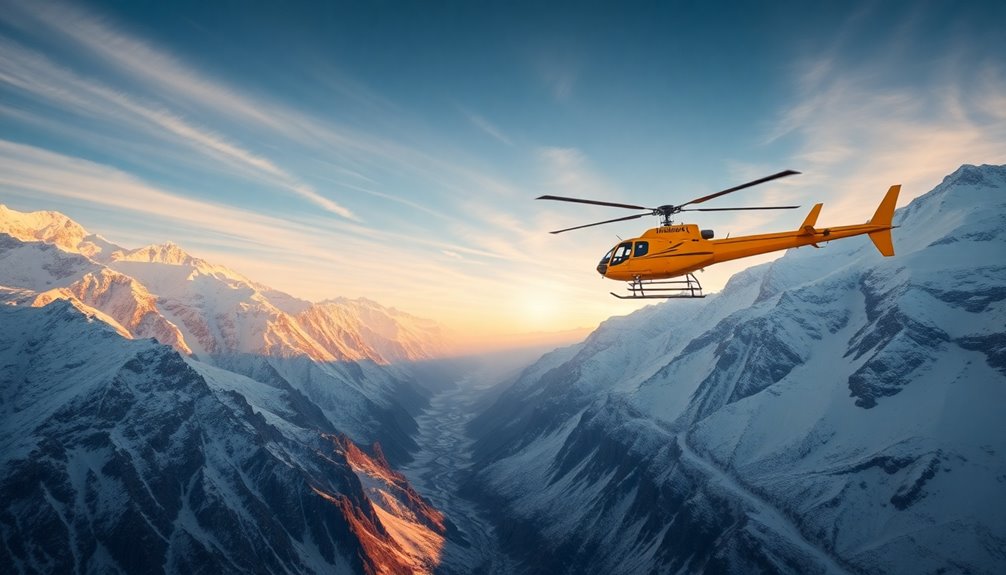
Picture this: she twisted her ankle, and the nearest road was miles away. Overland evacuation? Forget it. In this remote terrain, getting help quickly is pivotal. Helicopter rescue becomes the only option. But here’s the kicker—without a dedicated helicopter evacuation clause in her insurance, she might as well be shouting for help into a void. That’s not just bad luck; it’s a recipe for disaster.
And let’s talk numbers. Medical coverage is a must. For basic Himalayan treks, experts recommend at least $50,000. But if you’re aiming higher, especially above 4,000 meters, you better be ready to shell out $100,000 or more. Some trek operators in Nepal won’t even let you on the trail without it. High-altitude rescue? It can cost upwards of ₹5 lakhs. So, unless she wanted to drain her savings—goodbye, retirement plans—insurance was not merely optional. Emergency helicopter evacuations impose astronomical costs without insurance. Furthermore, the experience of one trekker highlighted how TravelGuard policy can efficiently cover evacuation costs when needed most.
Altitude limits also matter. Standard policies often exclude high-altitude activities. If she planned to tackle Everest Base Camp, her insurance should cover up to 6,000 meters. For the more daring, coverage might need to extend to the dizzying heights of 7,000 meters. Imagine getting stuck with an insurance policy that doesn’t even acknowledge your mountaineering ambitions. Hilarious, right? Not really.
But wait, there’s more! Rescue logistics can be a nightmare. Helicopter companies often require payment guarantees before they’ll even consider lifting you off the mountain. So, if she hadn’t verified her coverage before departure, she could be left hanging—literally. The urgency of weather delays also looms large. A storm can ground helicopters for days. Experts recommend purchasing travel insurance 14-21 days after deposit to unlock the most comprehensive coverage options, including protections that could prove critical in remote emergencies.
In a place where the stakes are high, and the terrain unforgiving, skipping travel insurance isn’t just naive; it’s reckless. She learned that lesson the hard way. Next time, she might just think twice before cutting corners on something as simple as insurance. Because in the Himalayas, it can be the difference between survival and a sad story.