
Design Highlights
- The postwar liberal order is visibly cracking, with Brexit symbolizing deeper systemic issues within Europe.
- Democratic backsliding is prevalent, particularly in Hungary and Poland, undermining rule of law and press freedoms.
- Populism and nationalism are on the rise, eroding support for democratic institutions and liberal values.
- Economic pressures, including rising inequality and stagnation, have led to perceptions of a rigged system favoring elites.
- Social cohesion is declining, exacerbated by security disruptions like Russia’s war in Ukraine, reshaping Europe’s landscape.
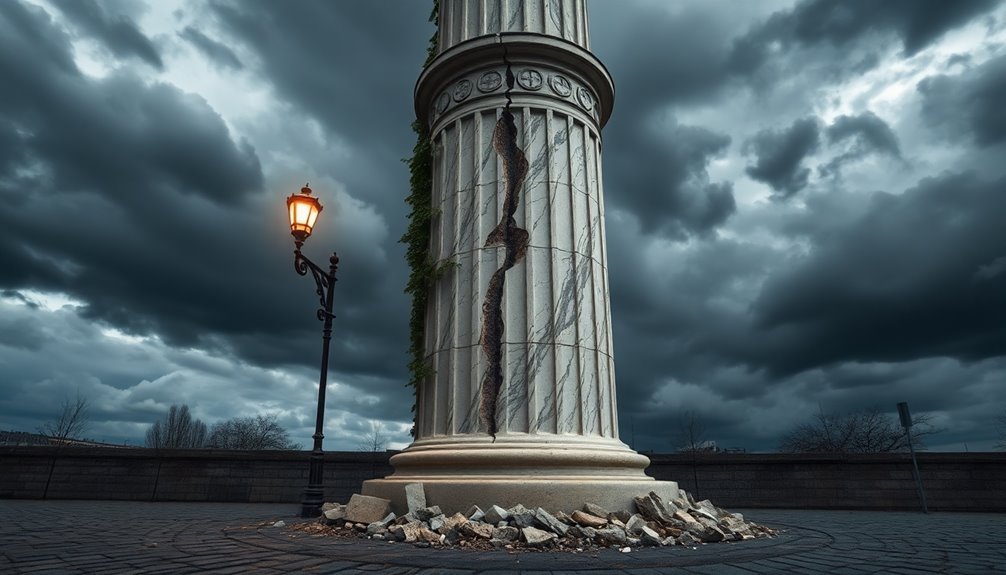
Europe’s liberal order, once a shining beacon of stability since 1945, is now looking more like a flickering candle in a storm. This postwar framework, designed to keep the peace after two world wars, is visibly cracking. The very foundations of Europe’s liberal project seem to be in a constant state of wobble. Just look at Britain’s exit from the EU. It’s a glaring sign that something’s off. The liberal order, which was supposed to unite, is now fracturing at its core.
Democratic backsliding is the name of the game, especially in Eastern Europe. Countries that were once models of liberal democracy are now coming under fire. Hungary and Poland, anyone? The rule of law? It’s taking a vacation there. Freedom of the press and the right to associate are being curtailed faster than you can say “illiberal governance.” This erosion of rights isn’t just a minor inconvenience; it’s a major red flag. In fact, the rise of anti-establishment forces indicates a significant shift in political priorities from economic to cultural issues. Meanwhile, data inconsistency in governance reflects the underlying instability of these nations as they grapple with their democratic principles.
And then there’s the rise of populism and nationalism. Populist parties have become the darlings of the discontented. Everywhere you look, there’s a backlash against liberal values. Nationalism is creeping in like an unwelcome guest, sabotaging the very structure of democracy. The public is increasingly supportive of ditching liberal institutions altogether. It’s like watching a slow-motion train wreck.
Economic strain doesn’t help either. Rising inequality and stagnation have left the working and middle classes feeling abandoned. Hyperglobalization? It’s a double-edged sword, generating problems for everyday folks while enriching the elite. Protectionism is making a comeback, and people are starting to view the liberal order as a rigged game. It’s hard to feel enthusiastic about a system that seems to favor only the wealthy. Much like how rising repair costs and inflation strain household budgets, economic pressures across Europe are pushing ordinary citizens further away from the promises of liberal prosperity.
Let’s not forget about social cohesion. Or the lack of it. People are feeling disconnected. The breakdown of social institutions has contributed to the decline of liberalism, as if something crucial is missing. The sense of belonging is fading. It’s all contributing to a “crisis of social purpose.”
And as if all that weren’t enough, Russia’s war in Ukraine is shaking up the European security landscape. The post-Cold War order? Shattered. Hard power and imperial ambitions are back in fashion. It’s a messy situation, one that’s reshaping Europe in ways we might not yet fully grasp. In short, the liberal order is hanging by a thread, and the storm is only getting worse.