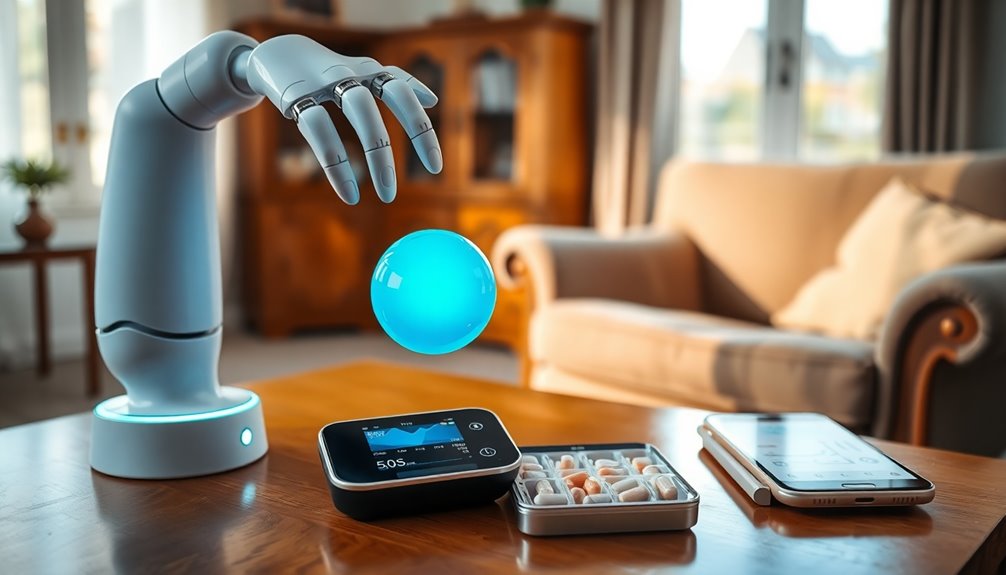

Design Highlights
- The aging population’s increasing demand for care exacerbates caregiver shortages, making AI solutions essential for workforce gaps in elder care.
- AI companions provide emotional support and reduce loneliness among seniors, complementing human interaction while addressing staffing limitations.
- Remote monitoring technologies enhance safety for older adults at home, functioning like a “smoke detector for health” to detect emergencies.
- AI tools improve clinical support through predictive analytics, ensuring better management of pain and medication adherence in geriatric care.
- By assisting with daily living tasks, AI technologies promote independence for seniors, offering essential support in maintaining quality of life.
In a world where caregiver shortages are as common as bad coffee, AI is stepping in as the unexpected hero in elder care. The truth is, the aging population is booming, and the demand for care is skyrocketing. But guess what? There aren’t enough caregivers to meet these needs]. Enter artificial intelligence, ready to lend a digital hand. From predictive analytics to robotic caregivers, AI is shaking things up in ways that could make even the most seasoned geriatrician raise an eyebrow.
Let’s face it: loneliness is a real killer. Social isolation among older adults is no joke. AI isn’t here to replace human interaction, but it sure knows how to supplement it. Smart voice assistants and chatbots are popping up everywhere, filling the gaps left by overworked staff. Who knew that a robot could be a better conversationalist than your average family member? These AI companions are designed to keep the spirits high and the conversations flowing, which is a big deal in the world of elder care. Emotional companionship? Yes, please! AI-powered social companions are showing outcomes of high engagement and reduced loneliness among senior users.
Monitoring and safety? Oh, AI has that covered, too. With technologies that can detect falls or unusual behavior, it’s like having a smoke detector for your health. Imagine your grandma wearing a device that tracks her every move, ready to alert caregivers at the first sign of trouble. It sounds a bit like sci-fi, but it’s happening right now. Remote monitoring is the name of the game, and it’s all about keeping older adults safe and sound in their homes.
And then there’s clinical support. AI’s got a toolkit that can assess pain, help with medication adherence, and even analyze electronic health records. Telemedicine platforms powered by AI are making it easier for seniors to access consultations, especially in areas where healthcare is about as scarce as a decent parking spot. Predictive analytics are the future, tackling the 4Ms of geriatric care: what matters, medication, mentation, and mobility. It’s like the ultimate checklist for aging gracefully.
Finally, let’s talk independence. AI technologies are stepping in to help older adults with daily living tasks. From managing medications to fall detection, these systems are designed to help seniors live independently longer. Just as renters insurance provides essential financial protection for personal belongings, having additional living expense coverage in place ensures seniors are supported when unexpected events disrupt their living arrangements. So, while the world grapples with caregiver shortages, AI is not just a backup plan; it’s becoming an essential part of the solution. In this brave new world of elder care, perhaps the real heroes wear circuits and code.