
Design Highlights
- Medicare Part D provides essential prescription drug coverage, significantly lowering out-of-pocket expenses for federal retirees.
- The program includes a $35 monthly cap on insulin, enhancing affordability for those with diabetes.
- Federal Employees Health Benefits (FEHB) often offer creditable coverage, allowing retirees to avoid immediate Part D enrollment.
- The Inflation Reduction Act caps annual out-of-pocket drug spending at $2,000, providing further financial relief for retirees.
- Improved catastrophic protections under Part D benefit retirees with high medication costs, ensuring they pay $0 after reaching the cap.
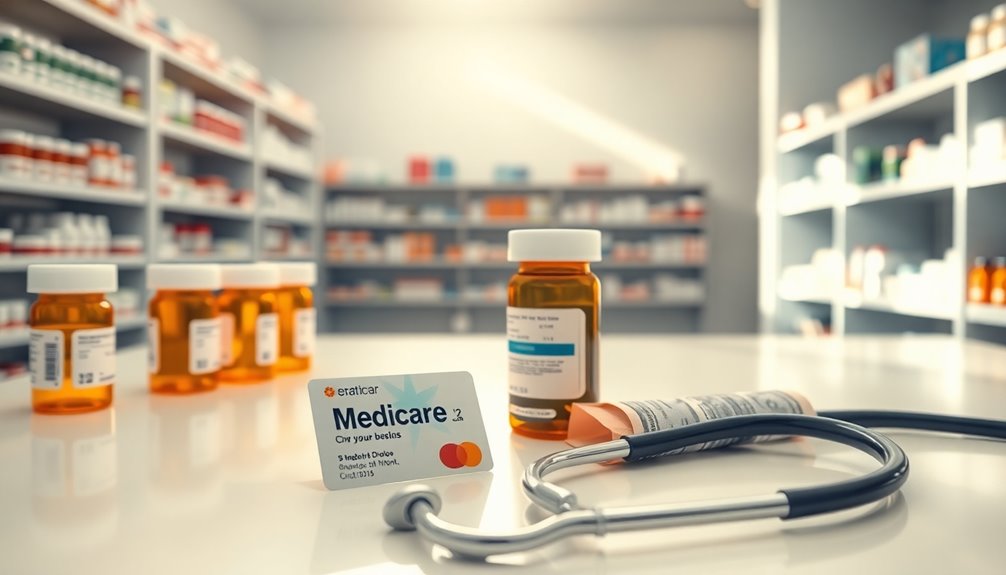
Steering the maze of Medicare can feel like trying to solve a Rubik’s Cube blindfolded—especially for federal retirees. Enter Medicare Part D, the prescription drug coverage that’s been around since 2006. A beacon of hope for those drowning in the sea of medication costs, Part D is optional but mighty. It’s designed to help pay for both brand-name and generic drugs, giving retirees a chance to lower those pesky out-of-pocket expenses.
Navigating Medicare can feel overwhelming, but Medicare Part D offers essential support for managing prescription drug costs.
But wait, there’s more! Many federal retirees have a safety net in the form of the Federal Employees Health Benefits (FEHB) program. This is where things get interesting. FEHB plans typically offer prescription drug coverage that’s considered “creditable.” That means most retirees didn’t feel the need to jump on the Part D bandwagon because FEHB already had them covered. Some plans even have built-in Medicare drug benefits, like a surprise party but with less cake and more paperwork. These retirees might find themselves auto-enrolled in a Part D-like option. Surprise!
The Inflation Reduction Act has thrown a lifeline to those with high prescription drug costs. With a cap on annual out-of-pocket spending set at $2,000 in 2025 and $2,100 in 2026, retirees can breathe a little easier. Once they hit that cap, it’s like a magical door opens—covered drugs cost $0 for the rest of the year. You heard that right: zero. It’s a sweet deal, especially for those who rely on a pharmacy like it’s their second home. Additionally, OPM encourages FEHB carriers to adopt improved Medicare Part D coverage, ensuring more options for retirees. This is particularly important as the improved catastrophic cost protection will greatly benefit those facing high medication expenses.
Now, let’s talk about penalties. If a retiree delays Part D enrollment without having that precious creditable coverage, they might get hit with a late enrollment penalty. Not cool. But if they’ve kept their FEHB coverage, they can usually sidestep that minefield. Medicare recommends thinking ahead, even if you think you’re a healthy retiree. You never know when prescription drugs might start creeping into your life like an uninvited guest.
To wrap it up, Medicare Part D isn’t just for show. It slashes prescription drug costs and offers special savings features, like capping insulin costs at $35 per month. Who wouldn’t want that? Federal retirees might find themselves in a sweet spot, piloting the twists and turns of Medicare with a little more confidence. Retirees should also note that Medicare Part B premiums are tax-deductible, offering an additional financial advantage when itemizing medical expenses. After all, who doesn’t want to save a buck or two in retirement?