
Design Highlights
- Rural areas in states like North Carolina and Illinois are experiencing significant hospital closures, limiting access to specialized care for seniors.
- High costs of nursing homes in states like Alaska make quality care financially burdensome for families, with few facilities meeting high standards.
- Staffing shortages in states such as New York and West Virginia lead to inadequate support and variable quality in senior care facilities.
- Geographic barriers force elderly individuals to travel long distances for care, increasing the likelihood of health crises in rural areas.
- Poor clinical care scores in states like Oklahoma and Louisiana correlate with high mortality rates among seniors, highlighting urgent healthcare needs.
In a world where healthcare should be a given, many seniors find themselves facing a frustrating reality: access to care is becoming critically unreliable. Take Georgia, for instance. This state is grappling with a severe shortage of primary care doctors and geriatric specialists, especially in rural areas.
Seniors are left waiting for appointments, sometimes for an eternity, all while juggling complex health conditions. It’s like a game of musical chairs, except there are far too few chairs.
Then there’s the issue of distance. Imagine this: an elderly person trying to get to a specialist who’s hours away. That’s not just inconvenient; it’s a nightmare. With rural hospitals closing faster than you can say “healthcare crisis,” the options are dwindling.
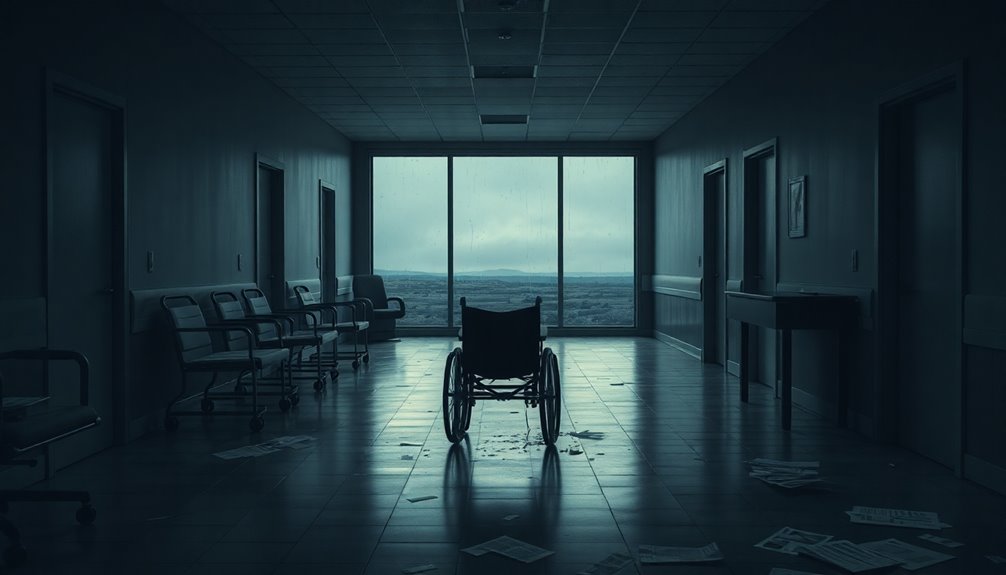
The nightmare of accessing specialists looms for seniors, as rural hospital closures leave them with dwindling options and endless waiting.
North Carolina saw its hospitals go from 74 to 52, while Illinois lost 24. That’s not just numbers; that’s real people struggling to get care they desperately need. Fragmented services mean seniors can’t get the continuous treatment that could keep them out of the hospital. Instead, they’re stuck in a cycle of chaos.
And let’s talk about costs. In Alaska, nursing homes charge a staggering $21,700 a month, but only 1.14% of them meet high standards. It’s a classic case of paying through the nose for subpar service. Furthermore, Louisiana’s in-home care costs lead the charge at an average of $8,800 a month. Who can afford that? The District of Columbia might have specialized facilities, but with a high cost of living, accessibility is a cruel joke.
Utah may look good on paper, but its healthcare access index is a dismal 10.5, ranking it among the worst states. Low staff-to-bed ratios in nursing homes further exacerbate the crisis, leaving many seniors without adequate support.
Staffing shortfalls are another punch to the gut. New York has the fewest nurse staffing hours at 3.6 per resident. West Virginia isn’t far behind at 3.7, with only 47% of facilities meeting quality standards. Much like how workers’ compensation coverage varies by state and leaves some employees without adequate protection, senior care standards differ dramatically depending on where you live. That’s right: seniors are getting care from facilities that can’t even get their act together. It’s a recipe for disaster.
Mortality rates tell a grim story. Oklahoma ranks among the worst states, plagued by poor clinical care scores. In Louisiana, older adults face some of the highest mortality rates.
Heart disease and cancer are killing seniors left and right, and the system isn’t doing much to stop it.
In short, the landscape of senior healthcare is a battleground, and the stakes couldn’t be higher. Access is slipping away, leaving many vulnerable and at risk. The clock is ticking, and the need for change is urgent.