
Design Highlights
- Neglecting Maintenance: Failing to perform regular maintenance can void your warranty, as manufacturers require adherence to service schedules.
- Aftermarket Modifications: Installing non-manufacturer parts or modifications often results in warranty cancellation due to potential damage they may cause.
- Ignoring Recalls: Not addressing safety recalls can lead to warranty voidance, as manufacturers expect compliance with necessary repairs.
- Mileage Overages: Exceeding mileage limits or warranty terms can completely cancel coverage, leaving drivers financially exposed to repairs.
- Claiming Loopholes: Manufacturers may exploit ambiguous warranty terms to deny claims; understanding your policy is crucial for avoiding pitfalls.
Most people think a car warranty is their safety net. They assume it will catch them when something goes wrong. But here’s the kicker—many modern vehicles are designed with parts that are engineered to fail just after that 36,000-mile warranty expires. Isn’t that convenient?
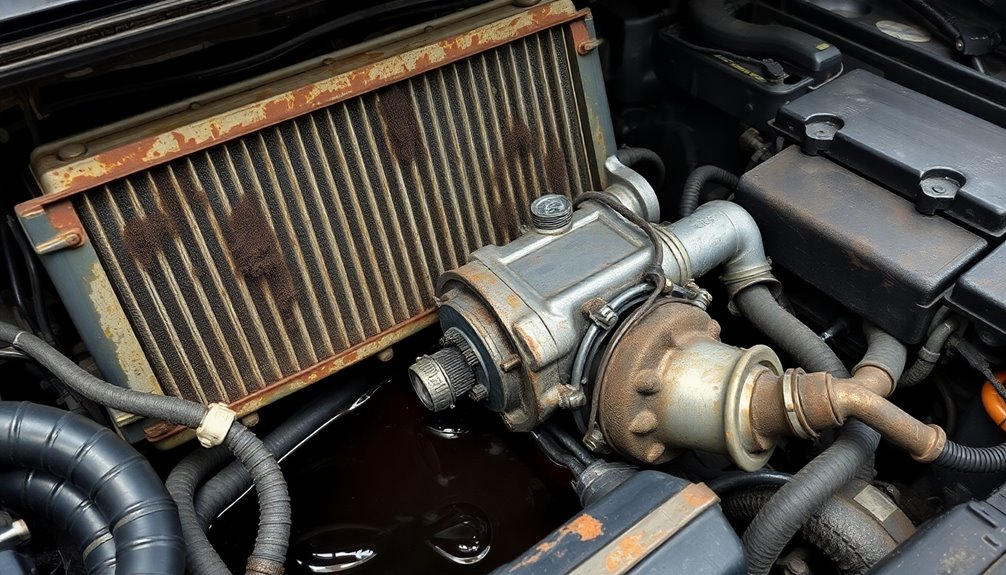
Manufacturers cleverly create complex components like turbochargers and direct injection systems with limited lifespans. And those “lifetime” fluids? Yeah, they’re only supposed to last through the factory warranty period. After that, it’s a roulette game with your money.
Manufacturers design intricate parts with short lifespans, leaving you gambling with your wallet once the warranty expires.
Synthetic fluids break down over time, turning into a gooey mess known as “black mayo.” This sludge can destroy crucial components like VVT solenoids, leaving drivers scratching their heads while diagnostic codes flash ominously.
And don’t even get started on coolant. That supposed “lifetime” coolant? It goes acidic after a while, corroding essential parts from the inside out. Radiators and head gaskets? They don’t stand a chance. It’s like a ticking time bomb under the hood, waiting for the warranty to expire.
The irony is rich. Manufacturers have cleverly designed these components to fail just as the warranty runs out. Electronic parking brakes? They’re notorious for failing right after the coverage ends. Additionally, with unrepaired safety recalls affecting a significant percentage of vehicles, drivers face even more risks post-warranty.
And if you think software updates will keep your car running smoothly—think again. Those updates often fail outside warranty coverage, leaving drivers to foot the bill for safety-related repairs. Talk about a surprise!
With standard factory warranties only covering three years or 36,000 miles, it’s a short game. Some manufacturers offer extended coverage, but even that rarely matches the actual lifespan of the components.
Warranty policies are riddled with gray areas. Manufacturers exploit these loopholes to deny claims, making it a nightmare for anyone trying to seek repairs. It’s like playing poker with a stacked deck.
Repair costs skyrocket when things go wrong. Turbocharger replacements? Prepare to empty your wallet. Direct injection systems? Expect a hefty diagnostic bill. Compounding these expenses, electric vehicle owners face an even steeper financial burden, as EV insurance costs average $4,058 annually—49% higher than gas-powered vehicles—reflecting the higher repair costs and shortage of trained technicians.
And if you think air suspension is a luxury, wait until it fails. The out-of-pocket costs can run into the thousands, leaving drivers feeling cheated.
With Ford and GM racking up billions in warranty costs, one has to wonder—who’s really winning here? The answer is clear: it’s not the drivers.