
Design Highlights
- Rideshare options like Uber and Lyft offer flexible transportation, reducing reliance on personal vehicles amid rising gas prices.
- Public transportation provides reduced fares for seniors, making it an economical choice for essential travel without the cost of gas.
- Paratransit services offer tailored, door-to-door rides for seniors unable to use public transit, ensuring safe and convenient travel at low costs.
- Community shuttles and volunteer driver programs provide free or low-cost rides, enhancing access to essential services while fostering social connections.
- Non-emergency medical transportation ensures seniors can access healthcare without financial strain, alleviating the burden of transportation costs.
How on earth do seniors maneuver the maze of transportation options today? It’s a jungle out there. With gas prices soaring, many are looking for alternatives that don’t require a second mortgage on their homes. Enter rideshare services, like Uber and Lyft. They’ve popped up in most U.S. cities, boasting features like real-time tracking and trip sharing with family. But let’s be honest. Not every senior is tech-savvy. Thankfully, GoGoGrandparent allows those without smartphones to book rides via a simple phone call.
And for caregivers? Uber Health is a godsend, scheduling rides for those who need it most.
Public transportation also deserves a mention. Buses and trains offer reduced fares for seniors. That’s a win! With accessibility features like wheelchair ramps and priority seating, they’re designed to cater to older adults. Sure, you might have to deal with a crowded bus during rush hour, but hey, at least you’re saving money while connecting with your community. Free or low-cost rides are also available through specialized services in many cities, making public transit a viable option. Moreover, these options are essential for maintaining independence and mobility as many seniors transition from driving.
Then there’s paratransit. This service is like the VIP treatment of public transit—door-to-door transport for those who can’t use regular services. With lifts and securement for wheelchairs, it’s a practical choice. Low cost? Check. Routes tailored for seniors? You bet. No more fumbling around in the cold trying to catch a bus.
Community shuttles are another option. They’re often free or low-cost, whisking seniors off to stores or appointments. Local centers and councils on aging manage these programs, guaranteeing high flexibility. Want to get out? Just hop on a shuttle.
And let’s not forget volunteer driver programs. Free rides provided by community members can be a lifeline. They offer more than just transportation—they combat loneliness, connecting seniors with friendly faces.
Non-emergency medical transportation is also critical, especially for those routine doctor visits. Door-to-door service, often covered by insurance, guarantees that seniors can access healthcare without breaking the bank. Statistics show that 40% of small businesses are likely to face unexpected financial claims within 10 years, underscoring why having reliable, cost-effective transportation solutions matters for seniors running home-based operations too.
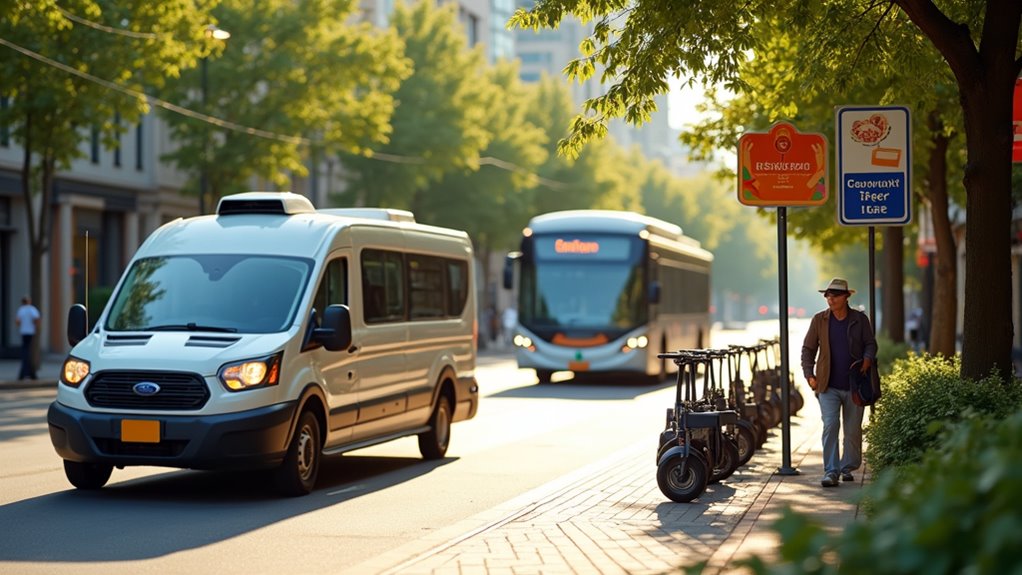
And if that isn’t enough, emerging alternatives like Waymo’s autonomous vehicles and electric scooters give seniors even more choices. Mobility without the stress of gas prices? Yes, please.
The options are out there, folks. It’s just a matter of maneuvering the maze.