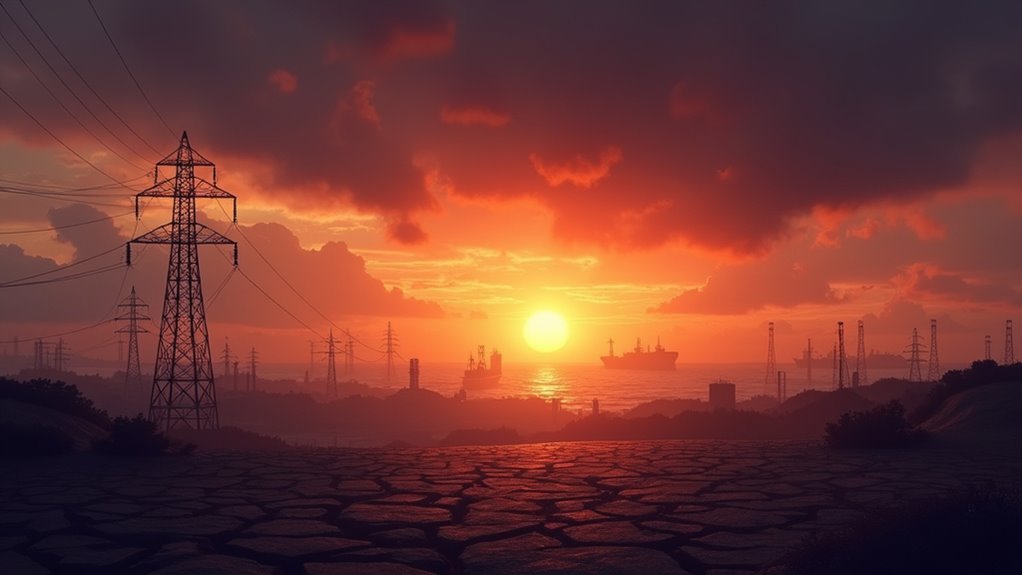
But just when it seemed like things were heating up, Trump decided to delay military strikes on Iran’s energy infrastructure for five days. Those “very good and productive” talks must have been something else.
This delay, announced on March 22, 2026, contrasts sharply with his original deadline, which was set to expire on Monday evening. No one knows who was in those talks or what was said, but it’s clear that Trump wants to keep the pressure on while holding off on immediate action.
Meanwhile, Iran didn’t take the news lying down. They vowed retaliation, threatening to target U.S., Israeli, and Gulf energy infrastructures. Iranian President Masoud Pezeshkian even claimed that these threats only serve to strengthen national unity. Talk about a pep rally!
The Strait of Hormuz is already a hot mess, effectively shut down for weeks. That’s a crucial route for oil, people! With Iran hitting ships trying to pass, global oil prices are climbing. They claim the strait is open to everyone—except “Iran’s enemies.” It’s a bold stance, but who’s surprised? One-fifth of the world’s oil transits through the Strait of Hormuz, making the stakes even higher.
Meanwhile, U.S. officials like Treasury Secretary Scott Bessent insist Trump will take all necessary steps, while National Security Advisor Mike Waltz is all about targeting Iran’s Revolutionary Guard-controlled infrastructure. Recent missile strikes from Iran have led to over 300 deliberate attacks on civilian sites in the region, raising alarms about escalating violence.
But let’s not forget the real drama here. Iranian missiles recently hit Dimona and Arad in southern Israel, causing injuries and shaking things up. The death toll since the U.S.-Israel attacks began is staggering, over 2,000 lives lost.
And as the conflict drags into its fourth week, there’s no end in sight. To add to the chaos, French President Macron is pushing for a moratorium on attacks against energy and civilian infrastructure. He’s trying to broker peace while the region is on fire. Individuals and businesses with significant assets exposed to catastrophic financial loss may want to consider umbrella insurance to guard against the unpredictable legal and financial fallout that can emerge from international conflicts.
The stakes are high, and the risks of tit-for-tat strikes could spiral out of control. It’s a tense game, and everyone’s waiting to see who makes the next move.