Design Highlights
- War risk insurance premiums have surged, significantly increasing costs for private jet operators landing in the Gulf.
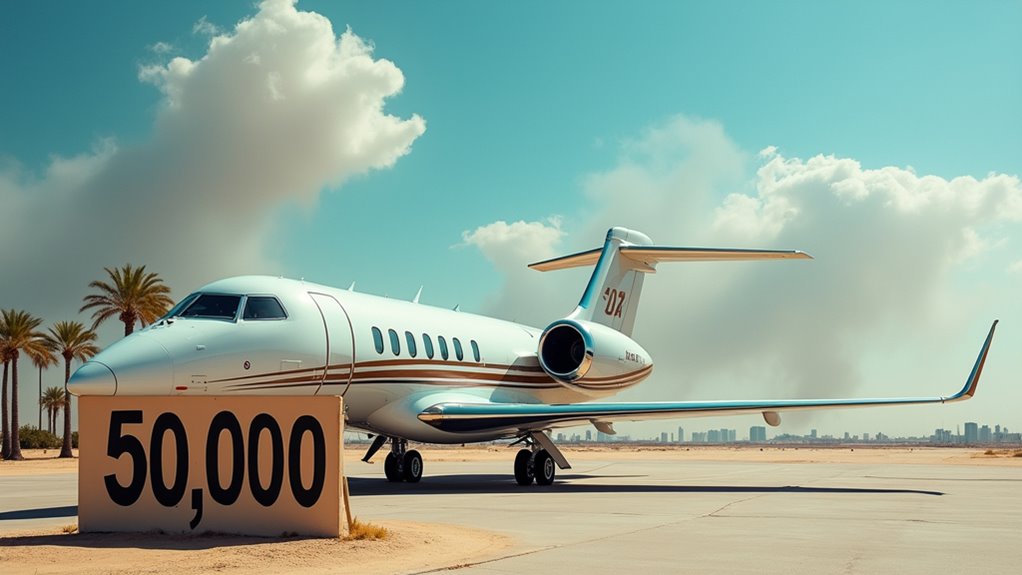
- Landing fees in the Gulf can reach up to $50,000, adding to overall flight expenses.
- Insurance bills may double charter prices, impacting client affordability and operational strategies.
- Operators are adapting by refueling outside the Gulf and minimizing ground time at regional airports.
- Despite increased costs, demand for private jets remains strong among wealthy clients seeking rapid travel.
In a world where private jets used to symbolize luxury and ease, the recent surge in war risk insurance premiums has thrown a wet blanket on the high-flying lifestyle. Who would have thought that landing a jet in the Gulf region could cost up to $50,000? That’s right—$50,000 just for the privilege of touching down. Suddenly, your weekend getaway isn’t just about the champagne and caviar; it’s about the intimidating insurance bill that can double the charter price. What a way to ruin a good time!
The luxury of private jets is overshadowed by soaring war insurance costs—$50,000 just to land in the Gulf!
This skyrocketing cost is directly tied to the escalating tensions between Iran and the U.S., which kicked off on February 28, 2026. Insurance companies, quick on the uptake, have reacted like a cat startled by a cucumber, adjusting rates faster than you can say “geopolitical shock.” War risk extensions are now part of the basic pricing, making those casual trips to the Gulf feel like a high-stakes gamble. Understanding War Risk Insurance is more crucial than ever for businesses operating in this volatile region.
Now, a typical large jet charter that used to cost around £10,000 per flight hour has jumped to about £20,000. That’s a pretty penny, especially when you consider that some operators are now paying three times the usual rates just to leave airports like Muscat and Dammam.
And let’s not forget the added fuel surcharges—another €2,000 or more per flight, thanks to oil trading at a jaw-dropping $115 per barrel. Good luck finding a bargain on that luxury jet!
Operators are trying to outsmart the system, refueling outside the Gulf to dodge those eye-watering premiums. They’re minimizing ground time at regional airports and working out new routes to avoid the most dangerous airspace. It’s a chess game of high stakes, all while trying to keep wealthy clients happy. After all, there’s nothing like a little chaos to keep the rich on their toes. War risk premiums typically range from $5,000 to $10,000, but can escalate sharply, making this situation even more precarious.
Demand surged right after the U.S.-Israeli strikes on Iran, but now it’s stabilizing as commercial airlines cautiously resume operations. Still, the wealthy aren’t deterred. They want those rapid departures and returns, no matter the price. Much like renters insurance, these policies come with policy limits and deductibles that can significantly affect the final cost of a claim.
Dubai Airport has processed around a million passengers in just three weeks since the conflict began. Talk about a crowded airspace!
The insurance market isn’t just sitting back either; marine hull insurance rates could jump 25-50%. Some underwriters are withdrawing coverage in high-risk areas. It’s a wild world out there, and for private jet owners, the sky isn’t the limit anymore—it’s a battlefield.