
Design Highlights
- Afroman won a defamation lawsuit against Adams County deputies, reinforcing the protection of artistic expression under the First Amendment.
- The jury ruled in favor of Afroman on all 14 counts, dismissing the deputies’ claims of humiliation and emotional distress.
- Afroman’s music videos, which mocked the deputies, were deemed protected as parody and social commentary.
- The ACLU supported Afroman’s case, highlighting the importance of free speech rights in artistic contexts.
- Afroman celebrated the victory as a significant win for freedom of speech, with supporters rallying outside the courthouse.
In a surprising twist straight out of a movie script, Afroman, the rapper known for his laid-back vibes and catchy tunes, just pulled off a major victory in a defamation lawsuit against several deputies from the Adams County Sheriff’s Office. The case, which unfolded after an armed raid on his property in August 2022, revealed a saga filled with bizarre twists. The deputies came looking for narcotics and kidnapping evidence but found zero criminal activity. Instead, they rifled through Afroman’s fridge and even his CD collection, confiscating a hefty $4,400 in cash. But wait—$400 mysteriously vanished when the money was returned. Spoiler alert: Afroman was never charged with a crime.
Afroman scores a monumental victory in a defamation lawsuit after a bizarre raid, exposing the absurdity of the situation.
Fast forward to the courtroom drama. The rapper didn’t just sit quietly; he turned the tables with music videos that showcased home surveillance footage mocking the officers. His songs slammed their actions, labeling them as “crooked cops” and poking fun at the missing cash. One deputy even earned the cheeky nickname “Officer Pound Cake.” The lyrics? They didn’t hold back, questioning the legitimacy of the raid warrant itself. “Narcotics and kidnapping? I make money rapping,” he quipped.
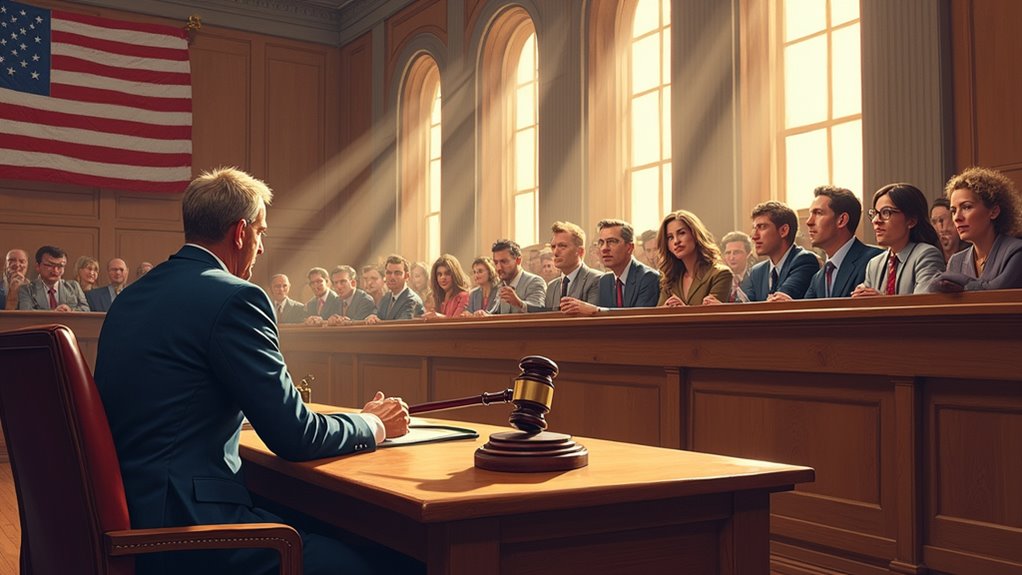
When the deputies filed their lawsuit in March 2023, claiming defamation, invasion of privacy, and emotional distress, they probably didn’t expect the backlash. Seven of them sought $25,000 each per count. But in an unexpected turn of events, the jury sided with Afroman on all 14 counts. The trial, which lasted three days in the Adams County Courthouse, saw Foreman donning an American flag suit, making it hard to miss his stand for free speech. In a pivotal moment, Afroman’s testimony emphasized that the jury deemed the songs as protected speech under the First Amendment. This case has tested the limits of parody and artistic license in social commentary.
The courtroom was charged with tension as Foreman detailed the damages from the raid, like a broken gate and door. He argued fiercely for his First Amendment rights, and even a defense witness admitted the deputies chuckled at Afroman’s songs. The jury, however, wasn’t swayed by the plaintiffs’ claims of humiliation and emotional distress. In a stunning verdict, they found the officers had no grounds for defamation. Much like how life insurance death benefits paid as a lump sum are typically tax-free for beneficiaries, Afroman walked away from this legal battle without bearing the financial burden the plaintiffs had hoped to impose.
As he exited the courthouse, Afroman shouted, “We did it, America! Freedom of speech!” Tears flowed, and cheers erupted from his supporters. The ACLU even jumped in with an amicus brief, highlighting the importance of free speech for all, not just artists. In the end, Afroman’s victory was not just personal; it was a win for everyone who dares to speak out.