
Design Highlights
- A 7-ton meteor exploded over Cleveland on March 17, 2026, traveling at 45,000 mph.
- The event caused vibrations and loud booms felt across multiple states in Northeast Ohio.
- Fragmentation released energy equivalent to 250 tons of TNT, rattling windows and shaking houses.
- The bright fireball was visible from Wisconsin to Maryland, with numerous videos capturing the moment.
- NASA confirmed the meteor’s details, classifying it as a rare and notable fireball event.
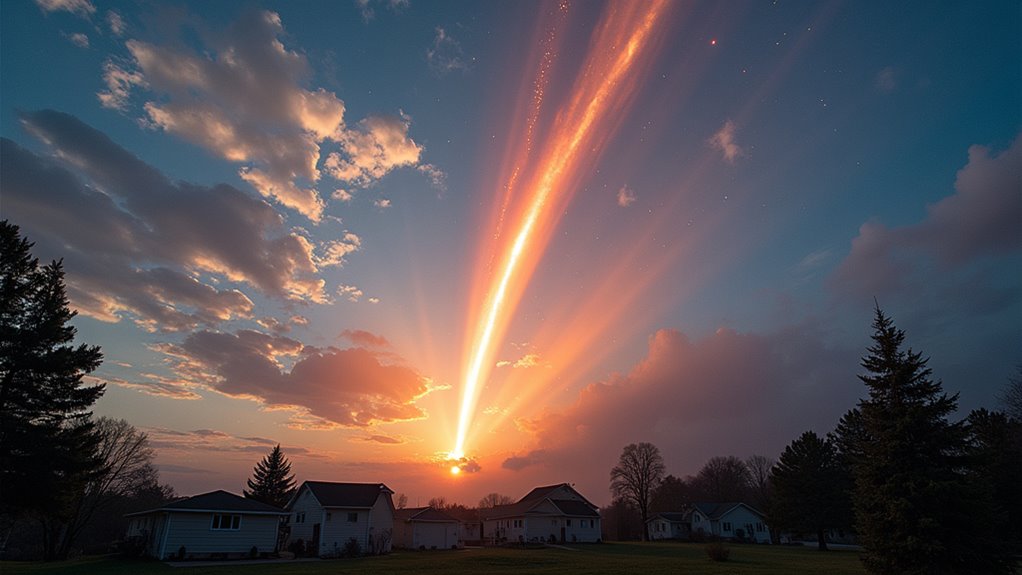
A meteor, weighing in at a hefty 7 tons, decided to put on a show over Cleveland on March 17, 2026. Picture it: just after 8:40 a.m., while everyone was probably sipping their morning coffee, this space rock was barreling through the atmosphere at a staggering 45,000 mph. Talk about a wake-up call! It was first spotted 50 miles above Lake Erie near Lorain, Ohio, and traveled 34 miles through the upper atmosphere before it decided to fragment over Valley City, north of Medina.
When it broke apart, it released energy equivalent to a whopping 250 tons of TNT. That’s right—TNT! The loud boom echoed across multiple states, rattling windows and shaking houses in Northeast Ohio. Even the staff at the National Weather Service in Cleveland felt those vibrations. Imagine sitting at your desk and suddenly feeling the earth move beneath you. Sounds like a scene from a disaster movie, but alas, no early reports of debris recovery surfaced that day.
The meteor’s explosive breakup shook Northeast Ohio, rattling windows and sending vibrations through offices—no debris, just a thrilling wake-up call!
This wasn’t just any meteor; it was a daytime spectacle, visible from Wisconsin to Maryland. At around 9 a.m., people looked up and saw a flash of light that made even the most mundane St. Patrick’s Day feel electrifying. Reports flooded into the American Meteor Society from as far west as Norwalk to the east in Pittsburgh, with dozens of videos capturing the moment. A meteor that big and bright? You bet people were hitting record.
NASA confirmed the details, with Bill Cooke from the Meteoroid Environments Office chiming in. The meteor was nearly 6 feet in diameter and classified as a fireball—definitely not your average falling space rock. Astronomer Carl Hergenrother pointed out that fireballs are far rarer and way brighter than reentering satellites. Meteors typically fall in the U.S. about once daily, so this event was particularly noteworthy.
Media reactions were mixed. The LA Times reported on the event, while a YouTube video titled “Meteor Hits Cleveland And Nobody Cares?” poked fun at public reaction. Confusion ensued, with some speculating about alien attacks or, heaven forbid, the Silver Surfer. But amidst the chaos, verified NASA data stood firm against rampant rumors. Homeowners and renters in the affected areas were reminded that fire and vandalism coverage under standard renters insurance policies could apply to property damage caused by falling debris, though floods and earthquakes require separate policies.