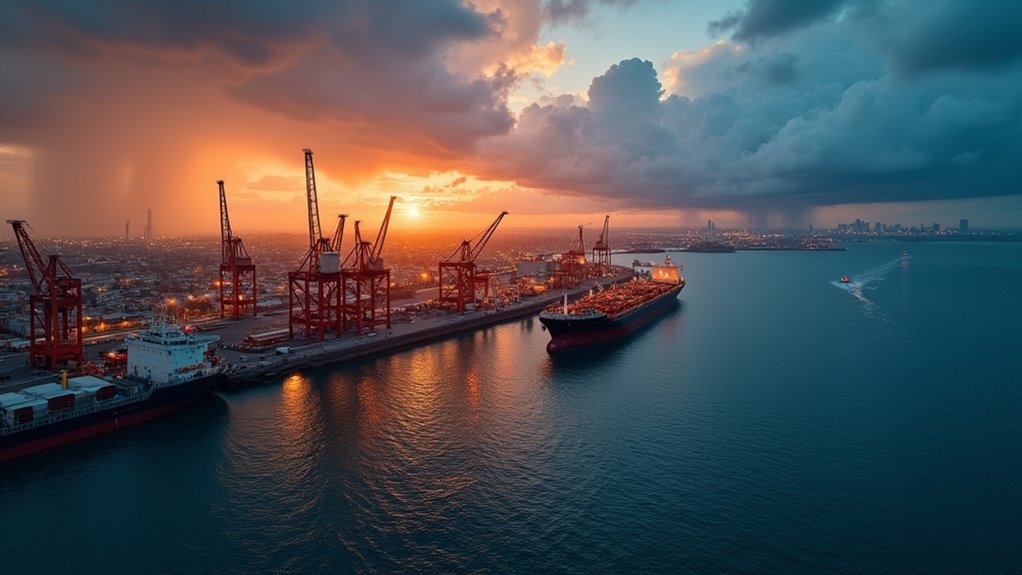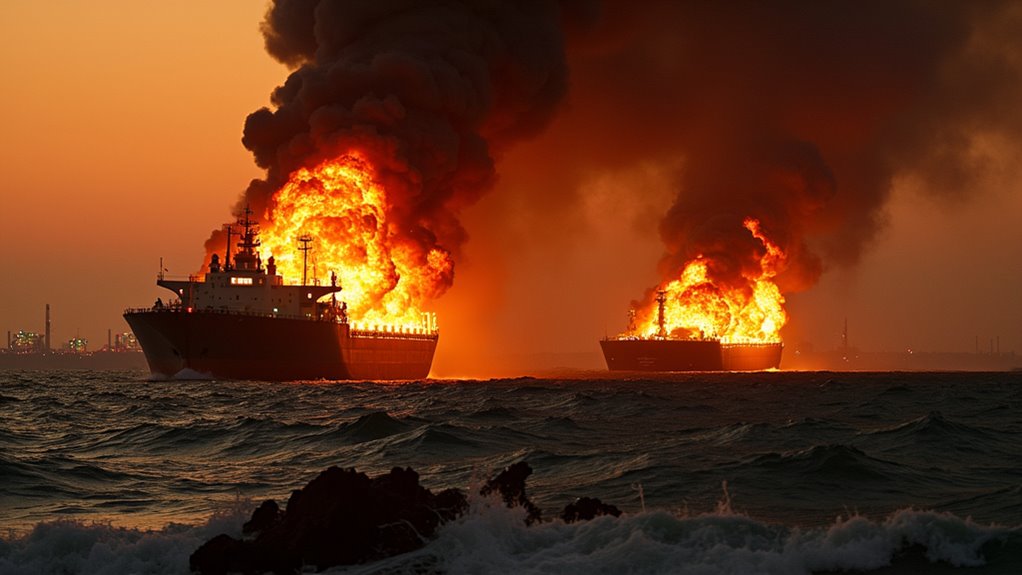

In a bold and reckless move, explosive-laden Iranian boats slammed into two fuel tankers in Iraqi territorial waters late Wednesday. The tankers, the Marshall Islands-flagged Safesea Vishnu and the Malta-flagged Zefyros, became engulfed in flames, with fires still raging despite frantic rescue efforts. One crew member tragically lost their life in this chaotic strike.
Explosive-laden Iranian boats wreaked havoc, slamming into two fuel tankers in Iraq, leaving one dead and fires raging.
Twenty-five others were plucked from the burning vessels by an Iraqi Ports Company boat, while the crew from one of the ships was evacuated and reported safe. But the damage was done—fires continued to blaze, and the situation was far from under control.
The attacks sent shockwaves through the region. Iraq’s southern oil terminals were completely shut down, throwing a wrench into operations and impacting global energy supplies considerably. The General Company for Ports of Iraq confirmed the closure of oil ports, and while commercial ports managed to stay operational, the effects on oil output were immediate. Iraq’s oil ports have ceased operations after recent attacks.
With, let’s face it, oil being the lifeblood of many economies, this wasn’t just a local problem; it was a recipe for an international crisis.
These weren’t isolated incidents. Projectiles have struck multiple vessels in Gulf waters, and since the fighting began, at least 16 ships have faced similar fates. The Safesea Vishnu had just loaded fuel in Iraq before it became a flaming target, while the Zefyros was also carrying Iraqi fuel. It’s almost as if someone took a playbook on maritime warfare and threw it out the window.
The Iranian Revolutionary Guard Corps (IRGC) has made bold claims of control over the Strait of Hormuz, warning that no oil shipments would be allowed if the attacks on Iran continued. Admiral Alireza Tangsiri stated vessels need Iran’s approval to pass the strait. What a charming way to conduct international relations.
Meanwhile, the U.S. has been busy destroying Iranian mine-laying ships and responding to escalating tensions. This latest round of attacks marks another perilous chapter in the already volatile Iran-U.S.-Israel conflict.
Drones targeting oil fields and projectile strikes on merchant vessels have made it clear: the stakes are high, and the region is teetering on the brink.
As oil prices surge and Gulf producers scramble for alternative routes, one can’t help but wonder just how much longer this precarious dance will continue. The world watches, holding its breath, as the Middle East edges toward a wider crisis.