
Yes, renters insurance covers theft of personal property—whether it’s stolen from an apartment, car, or coffee shop on the other side of the planet. The coverage includes electronics, furniture, clothing, and more. But there’s a catch. High-value items like jewelry typically max out around $1,500, and cash claims cap between $200 and $300. Filing requires documentation like police reports and proof of ownership. Certain exclusions apply, including theft by roommates and motor vehicles. The specifics matter more than most people realize.
Design Highlights
- Renters insurance covers theft of personal property both inside and outside your home, including at hotels or coffee shops.
- High-value items like jewelry, cash, and firearms have coverage limits, typically $1,500 for jewelry and $200-$300 for cash.
- Filing a claim requires documentation such as police reports, proof of ownership, and evidence of forced entry for break-ins.
- Theft by roommates, motor vehicles, and property at unlisted locations are excluded from standard renters insurance coverage.
- Replacement cost coverage pays full retail value while actual cash value coverage pays depreciated amounts, affecting premium costs.
Renters Insurance and Theft
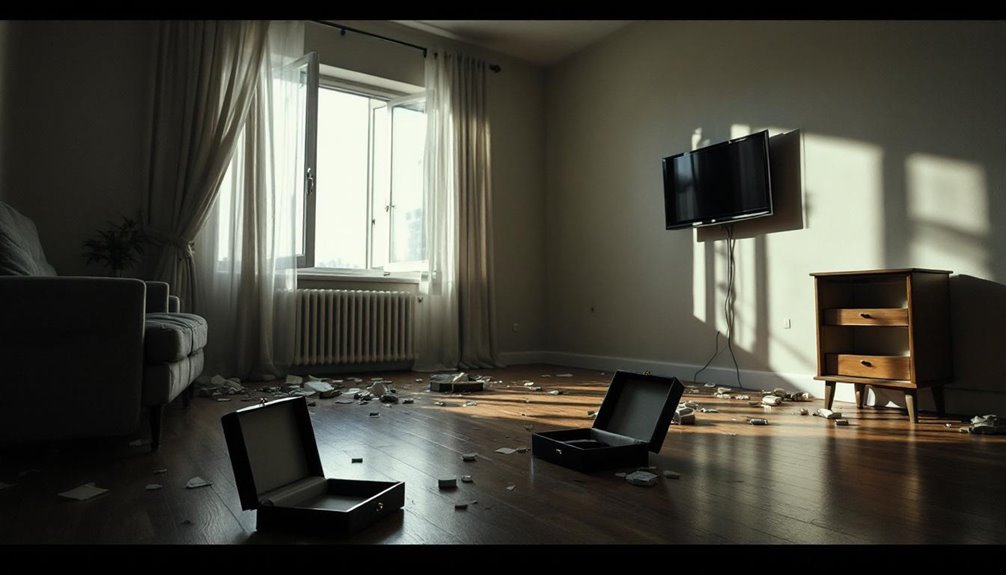
Renters insurance covers theft of personal property, and it doesn’t just protect stuff inside the apartment. The coverage extends globally, meaning a laptop stolen from a hotel room in another country is covered. So is a bike taken from a storage unit, a phone swiped at a coffee shop, or clothes stolen from a car. The policy follows personal belongings wherever they go.
Standard renters insurance includes theft coverage as part of personal property protection. Electronics, furniture, clothing, bicycles, and audio systems are typically covered without issue. But high-value items like jewelry, furs, silverware, firearms, and cash come with special limits. These sublimits cap payouts at specific amounts, often considerably lower than the overall policy limit. A $50,000 policy might only cover $1,500 in stolen jewelry without additional coverage.
High-value items like jewelry and firearms hit sublimits fast, capping payouts well below your overall policy limit.
Cash theft is covered, but barely. Most policies cap stolen cash coverage between $200 and $300. The theft must result from a break-in or burglary, not just disappear without explanation. Misplaced money doesn’t count. Documentation is required, specifically a police report. Without proof, there’s no payout. Cash limits can be increased with an endorsement, but the base coverage is laughably low.
The claim process demands documentation. Police reports are mandatory. Evidence of forced entry may be needed for certain claims. Proof of ownership or purchase receipts might be requested. The cost to replace stolen items must exceed the deductible before any money changes hands. Claims are processed like any other insurance claim, with reimbursement up to coverage limits. Notify the insurance company promptly after discovering a theft to begin the claims process. Creating a detailed home inventory with documentation of cash storage locations and amounts strengthens recovery chances and supports claims.
Exclusions matter. Theft by someone covered under the policy isn’t covered, which makes sense. Property at unlisted locations is excluded. Sublet property theft is out. Motor vehicles like cars, motorcycles, and boats are not covered for theft under renters insurance. Damage to the rental structure itself, like broken windows from a break-in, is the landlord’s problem, not the renter’s. It’s important to understand that landlords typically insure only the building structure, not tenants’ belongings, which is why renters need their own coverage.
Replacement cost coverage pays the current retail price of stolen items without depreciation. Actual value coverage pays the depreciated value. Replacement cost coverage results in higher payouts but increases premiums. It’s worth considering for expensive items that lose value quickly.
College students may be covered under a parent’s policy for losses up to a specified percentage. Improvements made to the rental unit by the renter may be covered up to a percentage of the policy limit. High-value items can be covered beyond standard limits with endorsements, expanding protection for specific valuables.
Frequently Asked Questions
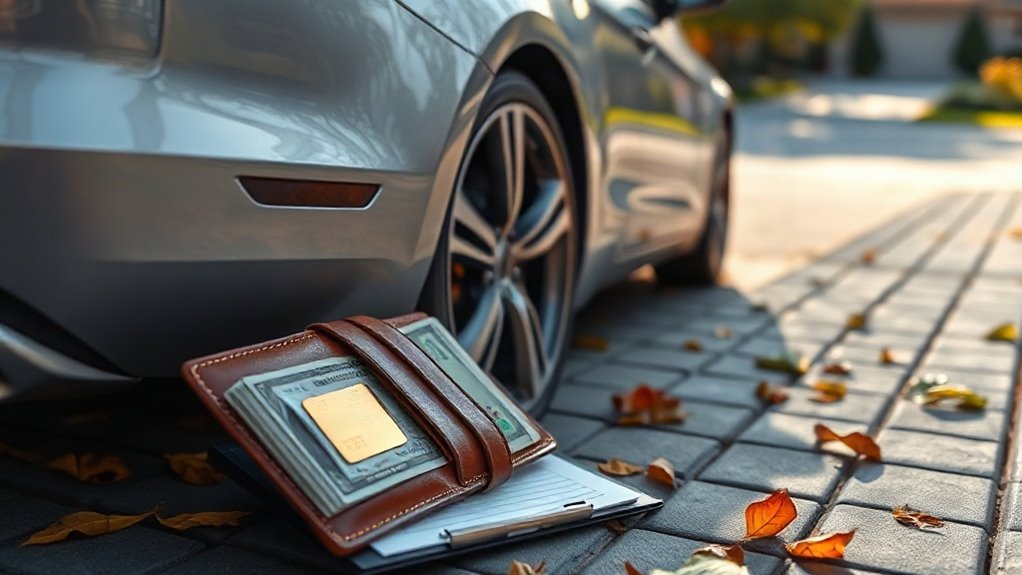
Does Renters Insurance Cover Theft From My Car Parked Outside?
Yes, renters insurance covers personal belongings stolen from a car parked outside.
Laptops, phones, gym bags—all fair game for coverage. But here’s the catch: there’s a deductible, and off-premises theft typically maxes out at 10% of the total policy limit.
Cash? Usually capped around $200. The car itself and any damage from the break-in? That’s on auto insurance, not renters.
A police report and proof of ownership are mandatory to file a claim.
Will My Premium Increase After Filing a Theft Claim?
Yeah, premiums can definitely go up after filing a theft claim.
Insurance companies see claims as risk flags, plain and simple. The increase sticks around for three to five years typically.
Multiple claims? Expect bigger hikes.
Some insurers offer claim forgiveness programs that might protect against rate jumps on a first claim. The amount claimed and local theft rates also factor in.
Each company handles this differently, so rates vary across carriers.
Is Stolen Cash Covered Under My Renters Insurance Policy?
Yes, renters insurance covers stolen cash, but good luck getting much back.
Most policies cap cash reimbursement at a measly $200 to $250, regardless of how much personal property coverage exists. That $30,000 policy limit? Doesn’t matter.
Cash gets its own pathetic sub-limit because it’s hard to verify and inventory. The insurer needs proof—police report, ATM receipts, bank withdrawal records.
And theft has to be a legitimate break-in or robbery, not a sketchy roommate situation.
Does Renters Insurance Cover Theft by Roommates or Guests?
Renters insurance typically covers theft by guests—those random people who don’t live there.
Makes sense. But theft by roommates? Nope.
Most policies explicitly exclude it because roommates have legal access to the property.
Insurance covers external threats, not internal disputes between people sharing a lease.
Even if a roommate is listed on the policy, their intentional theft remains uncovered.
It’s a coverage gap that catches people off guard, honestly.
Each roommate needs their own separate policy anyway.
What Documentation Do I Need to Prove Theft Occurred?
To prove theft occurred, claimants need a police report—that’s non-negotiable for most insurers.
They’ll also need a detailed inventory of stolen items with values, plus any receipts or purchase records they can dig up.
Photos of damage or the crime scene help.
A written statement explaining what happened, when it happened, and how they discovered it rounds things out.
Basically, document everything. The more proof, the smoother the claim process goes.