
Design Highlights
- Recent spikes in car insurance rates are driven by rising replacement costs and significant increases in repair expenses for both standard and electric vehicles.
- The inflation rate for car insurance exceeds overall economic inflation, contributing to higher premiums for consumers over time.
- State variations in insurance rates create disparities, with some areas experiencing much steeper increases than others, impacting overall costs.
- Recent trends show a 17% increase in premiums, indicating a pattern of escalating costs before potential stabilization in the market.
- Economic factors, including rising loss ratios, suggest that premiums may eventually decrease after reaching their peak, but only after current trends persist.
Historically, car insurance has seen an average annual inflation rate of 5.64% from 1947 to 2026. That’s right, it has outpaced overall economic inflation, which sat at a cozy 3.44%. If you think $500 was a lot in 1947, brace yourself: that same coverage would cost nearly $38,022 today. A total price increase of 7,521.61%—yikes!
And it doesn’t stop there. The recent spike from 2022 to 2024 was a doozy, with increases of 17.41% in 2023 and another 17.75% in 2024. Folks, that’s a steep hill to climb.
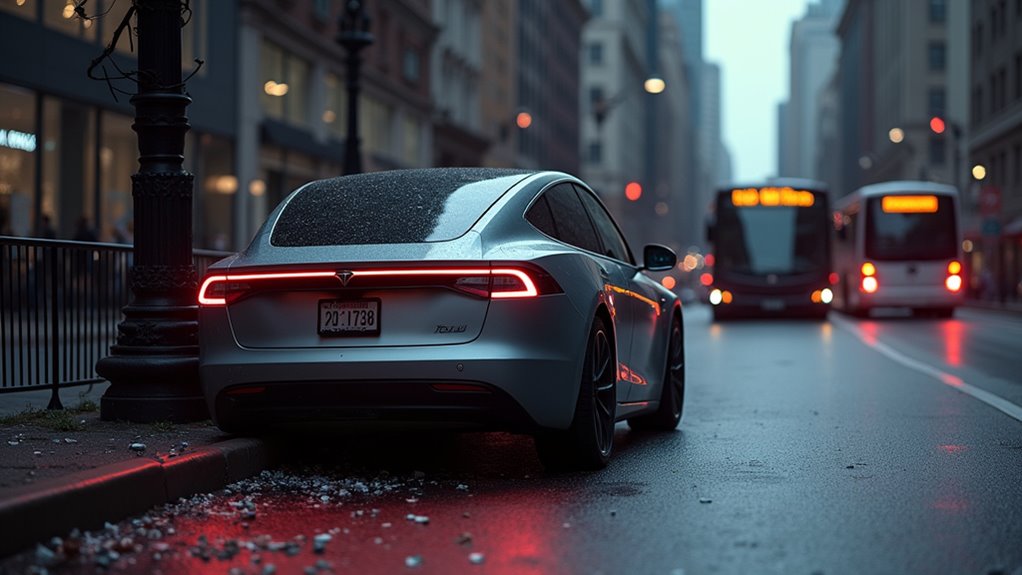
Why? Replacement costs are sky-high. Electric vehicle repairs alone average $6,587 per crash, compared to $4,215 for standard vehicles. Insurance for EVs runs about $357 a month, while gas guzzlers sit at $248. Moreover, the average cost of full coverage insurance has reached $2,910 annually, reflecting the rising financial burden on drivers.
Replacement costs are soaring: EV repairs average $6,587 per crash, while insurance hits $357 monthly—substantially higher than standard vehicles.
And let’s not even talk about the price of parts and equipment, which are climbing higher than a kite on a windy day. Additionally, the cost of car insurance has increased by 7,521.61% from 1947 to 2026, signaling a significant financial burden for drivers.
Now, with motor vehicle insurance making up 2.794% of the Consumer Price Index (CPI), it’s clear that this isn’t just a personal problem. It’s a national one.
In January 2024, a whopping 20.6% increase in automobile insurance rates was recorded compared to January 2023. That one metric alone added a 0.6% bump to the total CPI.
State-by-state, the variation is mind-blowing. Maryland’s at $4,224, while Idaho is a mere $1,600. That’s a 45% difference! Notably, Florida’s full coverage rates rank among the highest in the nation at $3,264 annually, while North Carolina sits at the opposite end of the spectrum at just $1,831 per year.
Let’s face it: car insurance is a rollercoaster ride, and the twists and turns are anything but fun. With rising loss ratios and accident rates pressuring premiums, drivers can expect to see bills climb first—then, maybe, just maybe, they might see a dip. But don’t hold your breath.