
Design Highlights
- Geopolitical tensions, particularly U.S.-Israel strikes on Iran, have drastically increased oil prices, complicating Washington’s response options.
- Maritime insurers have withdrawn coverage, leaving vessels stranded and hindering shipping routes critical for oil transport.
- Domestic gas and diesel prices are rising, straining lower-income consumers and complicating economic stability efforts.
- The Federal Reserve faces challenges balancing rate cuts with inflation control amid energy price volatility.
- Washington’s focus on suppressing Iranian threats limits its ability to facilitate oil movement and stabilize markets.
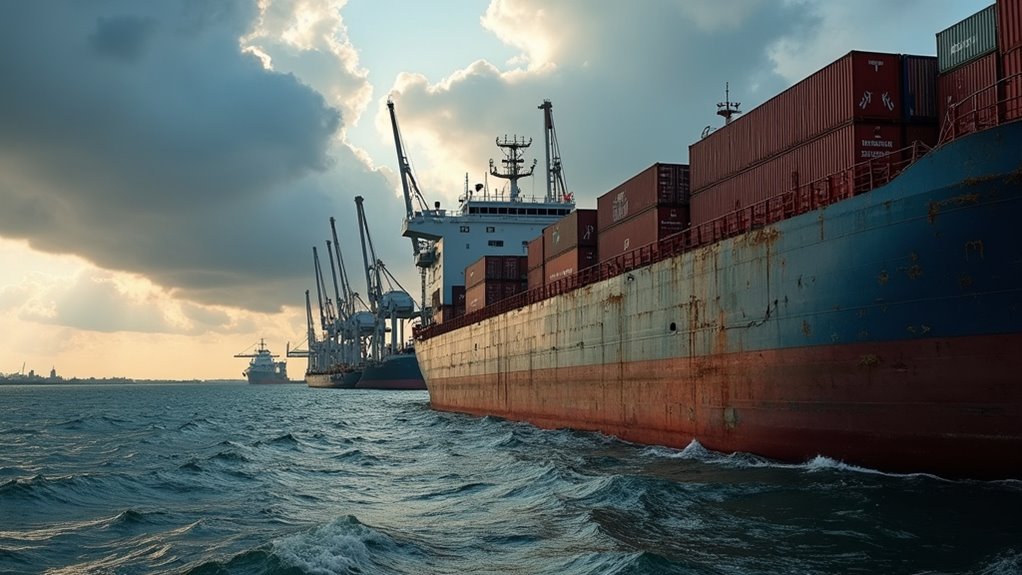
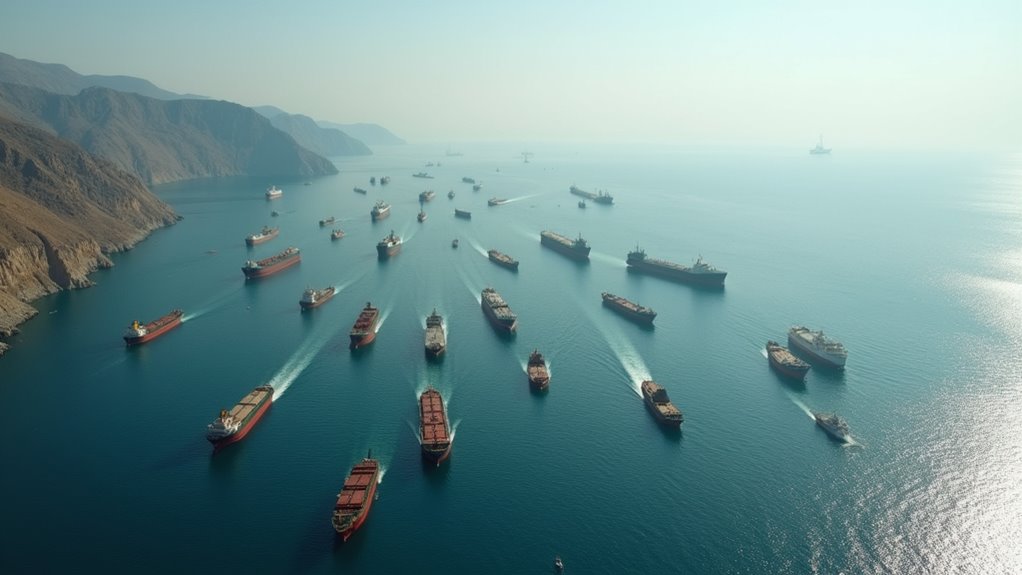
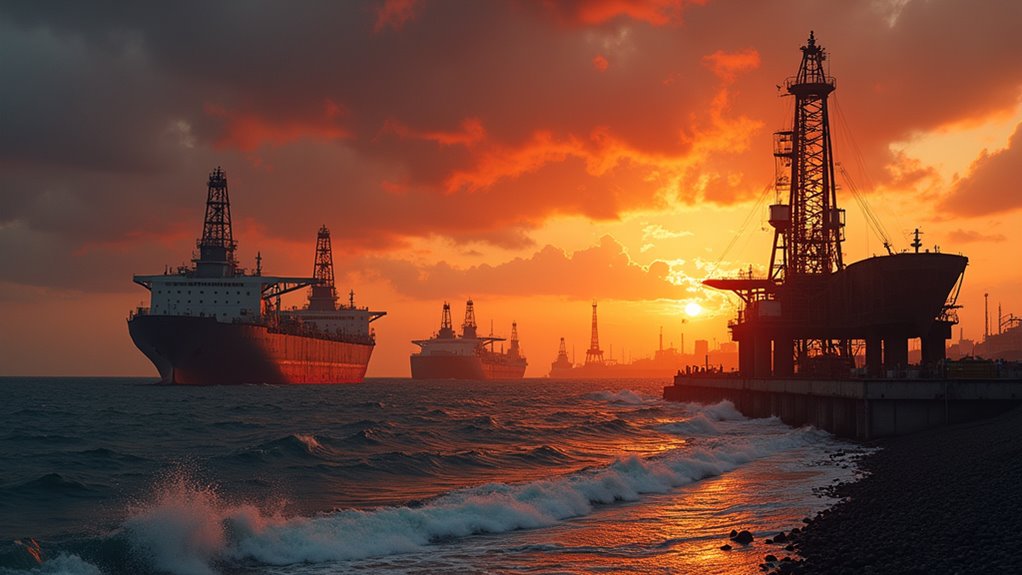
Oil prices are on a rollercoaster ride, and guess who’s gripping the safety bar? Washington. But they’re not just along for the thrill; they’re in a full-on panic mode as a perfect storm brews in the Middle East. The recent U.S.-Israel strikes on Iran sent oil prices soaring by 10%. That’s right—10%! Suddenly, the Strait of Hormuz, a critical artery for oil transport, is looking more like a no-go zone.
Maritime insurers have pulled the plug on war risk coverage, leaving vessels stranded in a game of chicken with geopolitical tensions. With about one-fifth of the world’s oil supply stuck in this quagmire, Brent crude prices are flirting with $84 a barrel. Analysts are practically predicting a dark future where crude could hit $200 if shipping traffic doesn’t resume soon. Talk about a nightmare scenario for the global economy!
In response, the White House rolled out a phased plan, but let’s be honest—these measures are about as effective as a chocolate teapot. Energy Secretary Chris Wright and Treasury Secretary Scott Bessent have proposed a $20 billion reinsurance program to coax tankers back into the Strait. But guess what? Shipping companies still think it’s too dangerous.
The plan to send military escorts? Delayed. The focus is on suppressing Iranian attacks, not on getting oil moving. Wright himself admitted that “physical security” is the real kicker here. Companies are not rushing to risk multi-million-dollar tankers in a war zone. The insurance programs aren’t cutting it—fundamental security issues are still a giant roadblock.
And let’s not forget the domestic fallout. Gas prices just topped $3 per gallon, the highest since last November, while the U.S. recently achieved record energy production with crude oil levels exceeding 13.6 million barrels per day in 2025. Diesel is over $4. It’s tough out there, especially for lower-income consumers who feel the sting the most. Furthermore, the anticipated price rise was acknowledged by U.S. officials, indicating that the situation is likely to worsen before it gets better.
The Federal Reserve is sweating bullets too. Energy price volatility could push their rate cut plans way back, from mid-year to who knows when. Market expectations have shifted from two rate cuts to just one and a half. The Fed is stuck between a rock and a hard place, trying to support the economy while battling rising inflation. Much like how specialty insurance endorsements can be required when standard policies fall short of covering complex risks, Washington may need extraordinary financial tools beyond conventional measures to stabilize energy markets. It’s a mess, a real tightrope walk.