
Design Highlights
- Airspace restrictions across 11 countries have severely limited cargo flights, halting vital logistics for fresh food and industrial goods.
- Major airlines, including FedEx and Qatar Airways, have suspended operations, reducing overall air cargo capacity by 18%.
- Increased air freight rates and war risk surcharges further strain shipping costs, impacting the supply of essential goods.
- Seafood exports and critical components are experiencing significant delays, causing disruption in supply chains and e-commerce operations.
- Extended lead times and irregular schedules contribute to growing backlogs, threatening the stability of air cargo logistics.
As the Middle East erupts in chaos, the air cargo industry finds itself in a tight spot. Operation Epic Fury kicked off on February 28, 2026, with the U.S. and Israel taking aim at Iran. Predictably, Iran retaliated with missile and drone strikes on U.S. bases throughout the region. The result? Over 500 lives lost, including six U.S. servicemembers. And for anyone keeping track, President Trump estimates this mess will last four to five weeks. Spoiler alert: It’s already a logistical nightmare.
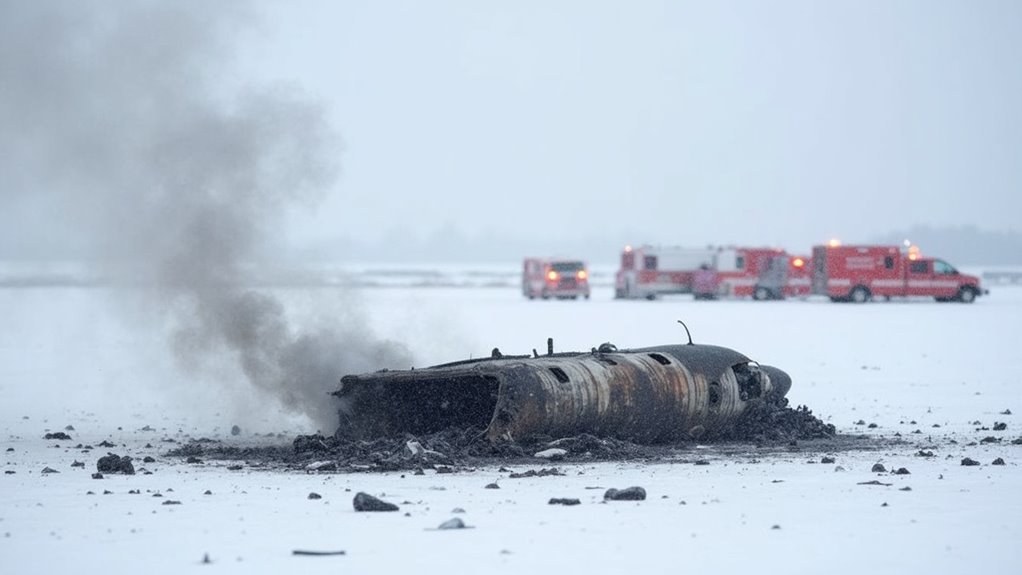
The chaos didn’t stop there. Airspace across 11 countries has been either closed or restricted. That includes Iran, Iraq, UAE, Qatar, Saudi Arabia, and even Jordan and Lebanon. With no-fly zones in effect, goods traffic has ground to a halt.
Airspace restrictions across 11 countries have paralyzed goods traffic, leaving logistics in a tailspin.
Major airports like Dubai and Doha? Grounded. They’re not even pretending to operate. And let’s not forget the pre-existing closures over Ukraine and Russia; they just added more fuel to the fire.
Airlines are suspending operations left and right. FedEx has pulled the plug on flights to and from Bahrain, Iraq, and several other hotspots. Emirates SkyCargo? They’ve halted everything until at least March 2, and Qatar Airways Cargo called it quits due to airspace restrictions.
And the big European airlines? They’ve canceled flights to the Gulf and Tel Aviv until March 8. Seriously, it’s like a game of musical chairs, and no one wants to sit down.
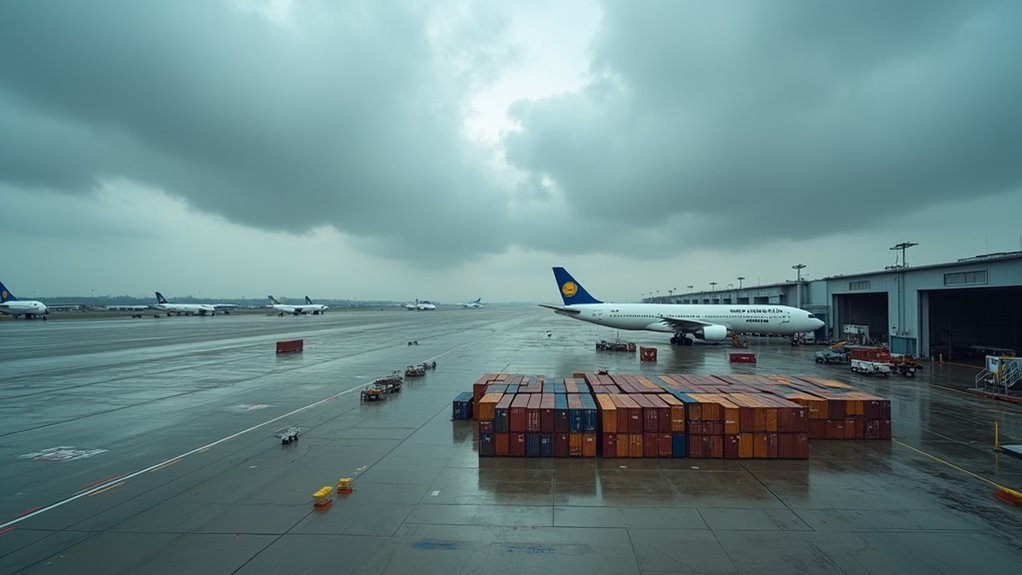
Capacity is taking a nosedive. Global air cargo capacity has dropped by 18%. That’s right, 18%. For routes from Asia to Europe, it’s an astonishing 26%. With the majority of Middle Eastern carriers grounded, the logistics landscape looks bleak. Airlines facing airspace closures further exacerbate the issue, leading to a significant reduction in available cargo capacity. Additionally, major shipping lines have avoided the Suez Canal since late 2023 due to security risks, compounding the already strained logistics network.
Rerouting shipments to European airlines just creates more delays. It’s like trying to swim upstream in a raging river — good luck.
And guess what? Air freight rates are skyrocketing. With fewer planes in the sky, prices are climbing. Longer routes mean higher fuel costs. War risk surcharges? Oh yeah, they’re making an appearance too. Talk about a delightful surprise for anyone relying on air cargo.
All of this chaos is wreaking havoc on supply chains. Seafood exports? Delayed. Critical components? MIA. E-commerce? Good luck with that if your goods are coming through Dubai or Doha.
Lead times are extended, schedules are irregular, and backlogs are piling up. In short, it’s a mess. The air cargo industry may not be going down without a fight, but it’s certainly feeling the weight of the chaos unfolding in the Middle East.