
Design Highlights
- The SCAC Verified initiative enhances identity verification, directly addressing identity fraud challenges in the trucking industry.
- Non-Class 8 carriers must undergo rigorous identity verification, excluding P.O. boxes and empty warehouses, ensuring real identities are validated.
- Advanced technologies like biometric scanning and facial recognition significantly raise the security standards for verifying carrier identities.
- The initiative combats issues like double-brokering and fictitious pickups, protecting brokers and shippers through real-time SCAC verification.
- Brokers are advised to remain vigilant for red flags, such as name changes or excessive rates, despite improved safeguards against fraud.
In a world where identity fraud is as common as bad coffee, the National Motor Freight Traffic Association (NMFTA) stepped up on March 3, 2026, with its SCAC Verified launch. This initiative aimed to enhance the integrity of Standard Carrier Alpha Codes (SCAC), a vital part of the trucking industry’s identity framework. It’s about time too. With fraudsters wreaking havoc, especially among non-Class 8 carriers—think service fleets, private carriers, food distributors—NMFTA decided enough was enough.
Starting February 26, 2026, carriers must undergo an identity verification process when applying for or renewing their SCACs. This isn’t just a casual handshake; it’s a thorough check that confirms there’s a real human being behind that code. Forget about P.O. boxes or empty warehouses. This process weeds out the fakes.
Carriers will now face rigorous identity verification for SCAC applications, ensuring real people stand behind those codes. No more fakes!
But here’s a kicker: it’s not a background check or a performance guarantee. It’s simply about proving you are who you say you are. This new requirement focuses solely on verifying identity and does not evaluate carriers’ operations or safety.
Why does this matter? Well, it combats all those nasty impersonation schemes and cargo diversions. Ever heard of fictitious pickups or double-brokering? They’re rampant, and this new standard aims to put a stop to it. It also protects against synthetic identity fraud, which has been creeping into the industry like an unwanted guest. Additionally, the verification process helps solidify credential integrity across the freight industry, which is critical for maintaining trust.
For legitimate carriers, this is a win. It offers a clear line of defense against identity theft and misrepresentation. Brokers and shippers can finally breathe a little easier, too, knowing they can verify SCAC statuses in real time during onboarding. It helps them dodge high-risk partners, which is a massive relief. Who wants to deal with that headache?
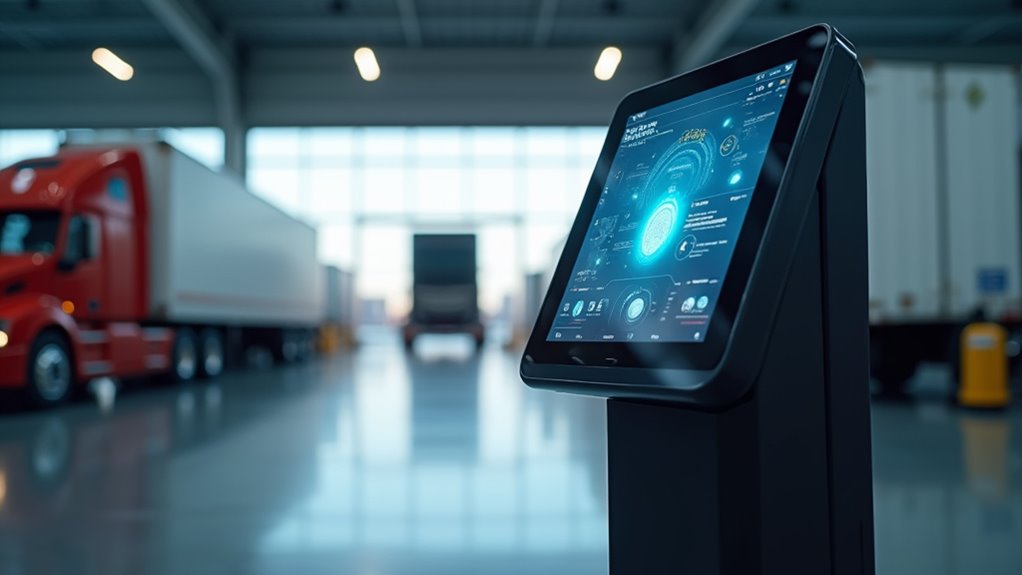
The tech backing this initiative is impressive. Advanced identity verification and biometric scanning, including facial recognition, are part of the mix. Real-time systems for documents and licenses? Check. Fingerprinting for drivers? Yep, that too.
This is not just a rubber stamp operation; it’s a full-on security overhaul.
And let’s not forget the industry warnings. Brokers are advised to be wary of name changes or excessive rates. If something feels off, it probably is. With all these layers of protection, the NMFTA is raising the security bar for everyone involved. Finally, a step in the right direction. It’s about time someone took fraud seriously in this industry.