
Design Highlights
- Overinsurance leads to inflated premiums, causing high-net-worth homeowners to bear unnecessary financial burdens.
- As premiums surge, trust between clients and insurance brokers diminishes, creating tension in relationships.
- Regulatory concerns arise as excessive coverage trends complicate compliance requirements for insurers and homeowners alike.
- Increased natural disasters heighten insurance challenges, making adequate coverage harder to secure for high-net-worth individuals.
- Insurers view overinsured properties as concentrated risks, leading to higher rates and less favorable terms for homeowners.
Overinsuring HNW Homes
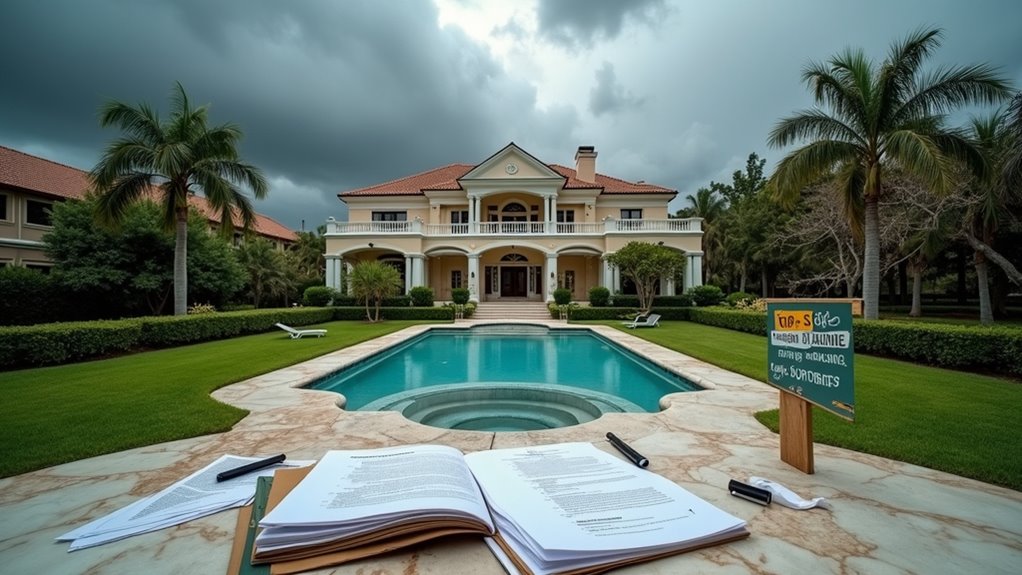
Overinsuring high-net-worth (HNW) homes has become a surprising norm, as if paying too much for insurance is the latest trend in luxury living. It’s almost like a badge of honor.
Overinsuring high-net-worth homes is the new luxury trend, almost a badge of honor for homeowners.
But let’s be real: overinsurance happens when owners carry coverage amounts that exceed the actual replacement value of their properties and belongings. So, what’s the big deal about tossing cash at something you don’t need? Well, it turns out, a lot.
Around 30-40% of agents say their clients likely have excessive insurance for things like detached garages and outbuildings. Seriously, who needs a $200,000 policy for a shed? This practice doesn’t just inflate premiums; it complicates fair-value compliance requirements. It can even create a rift of mistrust between clients and brokers.
The irony? This neglected risk is widespread in the high-net-worth insurance sector. With wealth concentrated in high-value properties, overinsurance becomes particularly costly compared to standard homeowner policies. Ouch.
The numbers are staggering. High-net-worth homeowners with $1.5 million-plus mortgages faced premium surges of 130% between mid-2020 and mid-2024. Meanwhile, folks in mid-priced homes saw a mere 12% increase. One client living in a $100 million Florida mansion witnessed their premiums skyrocket from $600,000 to $1.4 million in just one year. Talk about a heart-stopper.
Average property insurance premiums have risen over 30%, and high-end homes are taking the brunt of the hit. Overinsurance just compounds these increases, forcing owners to shell out for coverage they don’t actually need. Risk-based rate adjustments demonstrate that a one standard deviation increase in risk can lead to an almost $500 higher premium, further complicating matters. Moreover, increasing natural disasters are contributing to the challenges affluent individuals face in securing adequate property insurance.
As if that weren’t enough, 69% of high-net-worth and ultra-high-net-worth individuals faced hurdles securing adequate property insurance last year. One in five struggled to find homeowner’s insurance, with that number climbing to one in three in high-risk states like California and Florida. Insurers see single high-value properties as concentrated risks, leading to rate hikes or outright declines in coverage. Just like auto insurance premiums are influenced by location and crime rates, property insurers adjust their pricing based on geographic risk factors that can dramatically affect costs.
In states like Texas and Florida, clients are losing sleep over coverage exclusions. Why? Because of catastrophic events like Winter Storm Uri and Hurricane Ida, which left insurers in a financial tailspin.
The whole situation reeks of chaos, and yet, overinsurance quietly punishes owners while regulators look on with concern. It’s a bizarre game, and it seems no one is winning.