
Design Highlights
- Real-time tracking of vessels enhances maritime safety, making it harder for pirates to operate undetected in hotspots.
- Disabling AIS in piracy-prone areas quickly triggers alarms, ensuring timely responses to potential threats.
- Advanced satellite surveillance helps identify dark vessels and suspicious behavior, providing vital intelligence for maritime security.
- Immediate alerts from reporting centers enable vessels to alter routes, reducing risks of piracy-related incidents and delays.
- International cooperation and information sharing enhance overall vessel protection, leveraging technology to combat piracy effectively.
In the world of maritime safety, real-time tracking isn’t just a luxury; it’s a necessity. With piracy and smuggling still lurking in high-risk hotspots like the Gulf of Aden and the Malacca Strait, keeping tabs on vessels has become a matter of life and death. Ships broadcast their position, speed, and course every few seconds through AIS transponders. This isn’t just a neat trick; it’s vital for survival. Imagine a ship going dark, disabling its AIS in areas notorious for piracy. That’s when alarms should start ringing.
In maritime safety, real-time tracking is essential; disabling AIS in piracy hotspots raises critical alarms for ships’ survival.
These dark vessels are often up to no good, and advanced platforms are on the case. Satellite surveillance can spot sudden course changes or ships that linger too long in restricted zones. If a vessel hasn’t pinged its AIS signal for over 24 hours in a known piracy area, it’s a red flag. That’s an invitation for trouble, and nobody wants that. Meanwhile, AI is working overtime to filter out the noise—spoofed signals and anomalies—ensuring that the data is as reliable as a GPS in a snowstorm.
Despite a small drop in overall attacks in recent years, the statistics are sobering—119 casualties in 2023 alone, a 60% increase from the year before. It’s not just numbers; these are lives on the line. The Gulf of Guinea and Southeast Asia are still hotbeds for incidents, with choke points managing a staggering 41.4% of global shipping traffic. This underscores the importance of 12,000+ vessels being tracked in real-time to provide crucial insights for maritime stakeholders. The rise in piracy incidents, particularly in Southeast Asia, highlights the urgent need for effective monitoring solutions. Just as proper beneficiary designation is vital in life insurance to avoid tax complications, correct vessel registration and insurance documentation is essential for maritime protection coverage.
Real-time reporting systems like the ICC IMB Piracy Reporting Centre are stepping up. They provide immediate incident reports to vessels and navies, fundamentally saying, “Hey, you might want to change that route.” It’s a game changer. The systems even offer cargo arrival predictions, because delays are the last thing anyone needs when pirates are circling.
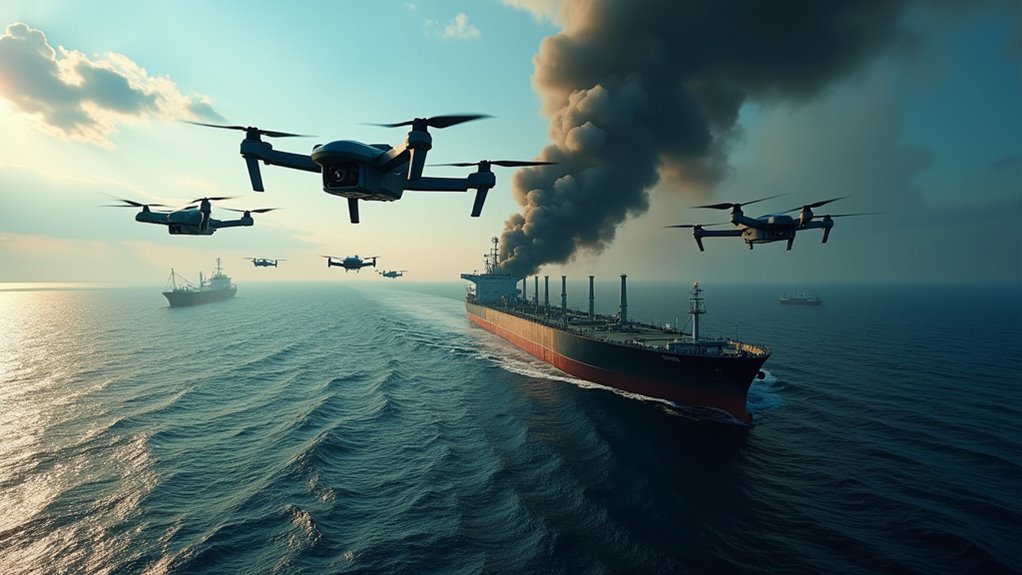
AI-enhanced protection? Yes, please. Tools like ShipIn FleetVision are on watch, processing 4K footage for threats. If a drone or suspicious boat approaches, alerts are sent in under two seconds. Imagine the peace of mind!
International cooperation is also a key player in this drama. Combined Maritime Forces conduct patrols in high-risk routes, sharing information like it’s the hottest gossip. With all this technology and teamwork, the odds are increasingly in favor of protecting vessels in dangerous waters. Real-time tracking is no longer just a safety net; it’s the lifeline that keeps ships safe from the clutches of pirates.