Design Highlights
- One-third of EU workers face heat risks, with construction and agriculture being the most affected sectors requiring immediate safety measures.
- Extreme heat exposure increases the likelihood of heat-related illnesses and accidents, highlighting the urgent need for protective regulations.
- Regions without specific heat protections experience significantly higher injury rates, emphasizing the importance of tailored safety standards.
- Psychological distress related to heat impacts worker well-being, necessitating comprehensive health support systems alongside physical safety measures.
- Proactive adaptations in labor practices and regulations are crucial to ensure worker safety in the face of rising temperatures.
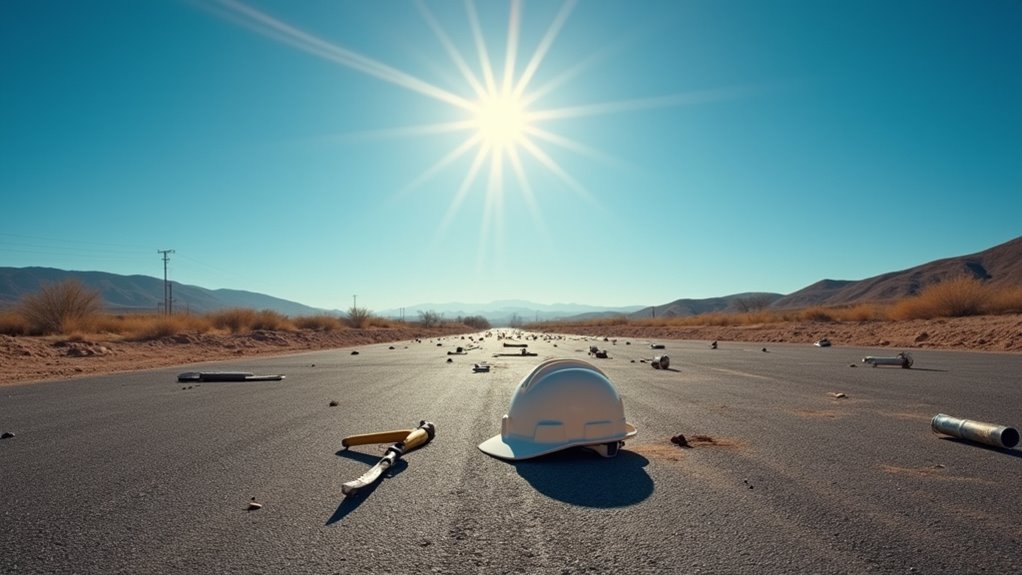
What happens when the heat turns up and the stakes get higher? Well, for millions of workers, it’s no walk in the park. In fact, about one-third of EU workers are already exposed to climate change risks. Let’s break it down. A staggering 20% of these workers report extreme heat exposure. That’s not a cozy summer day; that’s a full-blown sweat-fest.
And it gets worse. Nearly 23 million U.S. workers suffer from heat-related illnesses every year. That’s right—millions are battling heatstroke and dehydration while just trying to make a living.
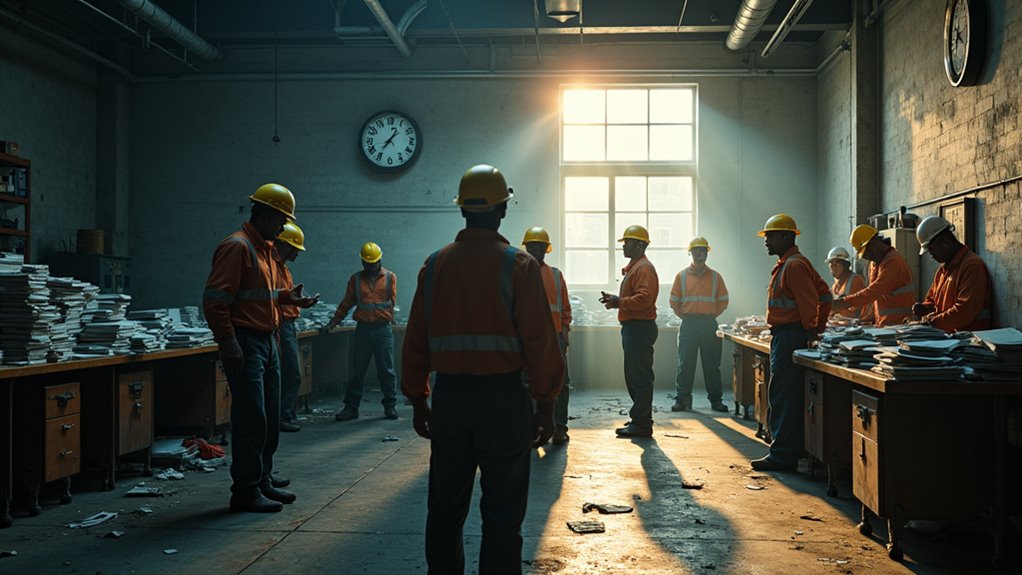
Now, if you think construction is just about hard hats and hammering nails, think again. Construction workers make up only 7% of the workforce but account for over a third of occupational heat-related deaths. You’d think that’s a wake-up call, but apparently, the alarm is still ringing.
Construction workers, just 7% of the workforce, face over a third of heat-related deaths—a serious wake-up call still ignored.
And let’s not forget agriculture, forestry, and fishing. A whopping 35% of these workers deal with extreme heat regularly. Talk about a hazardous workplace!
Then there’s the health impact. Almost one in ten EU workers report heat-related symptoms like cramps and dizziness. Over the past decade, extreme heat has caused 335 fatalities in the U.S. and more than 20,000 illnesses. That’s a lot of people sidelined by the sun.
The risks? Heatstroke, kidney dysfunction, and even neurological disorders. It’s not just physical, either. Psychological distress is creeping in, thanks to the relentless heat and stress. Additionally, 31% of workers express concern about health and safety impacts of environmental risks.
As temperatures rise, so does the probability of work accidents. Just imagine: if the mercury hits 90°F, your odds of getting hurt increase by 5-6%. At 110°F? Good luck. The chances jump by 22%. In fact, 33% of ocean workers have experienced serious harm from severe weather in the last two years, highlighting the expanding risks for workers.
And let’s be real; many heat-related injuries go unreported, especially in construction. Slips, falls, and judgment errors become daily hazards under the blazing sun. When workers do suffer heat-related injuries, workers’ compensation insurance provides medical care and wage replacement regardless of who was at fault.
Regional differences add another layer to this mess. Southern Europe? Yeah, they’re sweating it out more than ever. California has made strides with heat standards, reducing injuries markedly.
But those without such regulations? They’re looking at a 22% increase in injuries during heatwaves. The future doesn’t look bright; 2024 is on track to be the hottest year ever.