
Design Highlights
- Smarter farmer training equips growers with skills in winter crop management, reducing the risk of losses from harsh weather conditions.
- Training programs emphasize soil health and pest management, enhancing crop resilience against winter stresses.
- Utilizing precision farming techniques, farmers can optimize resource use, minimizing waste and maximizing crop yield during winter months.
- Advanced tools, such as AI and drones, are incorporated into training, enabling proactive disease prediction and timely interventions.
- Continuous learning through monthly meetings allows farmers to share best practices and adapt to evolving climate challenges effectively.
In the world of farming, it’s not just about plowing fields anymore—it’s about precision. Gone are the days of tossing fertilizer around like confetti and hoping for the best. Today’s farmers are arming themselves with advanced tools that monitor crops and fields, allowing for targeted applications of water, fertilizers, and pesticides. This is not just smart; it’s vital. The right amount at the right time can make or break a harvest.
Farmers are ditching the one-size-fits-all approach. Why? Because data analytics on soil, crops, and weather means they can optimize resources. It reduces waste and boosts crop quantity and quality while keeping Mother Nature happy. Can you imagine slashing costs while making your soil dance with joy? That’s the dream.
Farmers are moving beyond one-size-fits-all, using data analytics to optimize resources and enhance both yield and environmental harmony.
Now, let’s talk about smart irrigation systems. These aren’t your grandma’s watering cans. Moisture sensors and timers guarantee crops get the water they need—when they need it. Real-time data means no more guessing games. If it’s about to rain, the system can halt watering. Simple, right? Farmers can save 20-60% on water use. That’s not just a drop in the bucket—it’s a flood of savings.
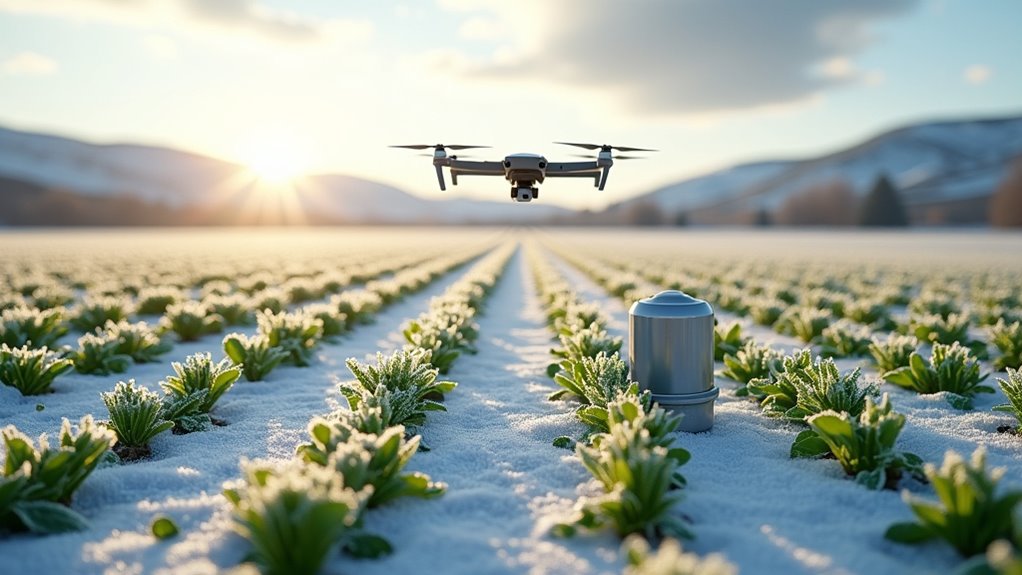
And don’t forget the drones! These flying wonders can cover up to 50 acres a day. They’re not just for taking pretty pictures; they’re on the lookout for crop growth and hidden plant stress. Surveillance, planting, pest control, and spraying—drones do it all, cutting costs and keeping workers safe from chemical exposure. It’s like having a farm assistant who never takes a break.
Artificial intelligence is also stepping into the ring. AICropMonitoring brings 24/7 crop surveillance to the table. It predicts diseases and recommends fertilizers. Some farmers in India have even doubled their incomes thanks to AI. AI-based crop monitoring is a true revolution in farming. If that’s not a game-changer, what is?
But training is where it all starts. Farmer training programs build vital skills in soil health, crop planning, and pest management. Monthly meetings, field days—this isn’t just a lecture; it’s hands-on learning. Smart farming technologies not only enhance resource management but also ensure better sustainability in agricultural practices. As farms grow into more substantial operations, protecting those assets with umbrella insurance can shield farmers from liability claims that exceed standard policy limits.
In a world where climate change is real, adapting quickly is critical. Resources are being prioritized for those who need them most—beginning farmers, veterans, and BIPOC communities. The focus is on nimble adaptations to ever-changing weather patterns.
In short, smarter farmer training isn’t just a nice-to-have; it’s a necessity. It slashes those costly winter crop losses and sets farmers on a path to success.