Design Highlights
- A Los Angeles Superior Court ruling allows fire victims to sue LADWP for inadequate emergency water supply during the 2025 Pacific Palisades wildfire.
- Judge Samantha Jessner’s decision impacts hundreds of claims regarding significant damages estimated in the tens of billions.
- Victims attribute their losses to LADWP’s negligence in providing sufficient water pressure during the wildfire.
- The ruling counters LADWP’s legal strategies to evade accountability for its emergency service failures.
- Similar issues arise for Edison, facing scrutiny after the Eaton Fire, highlighting broader public safety concerns in utility management.
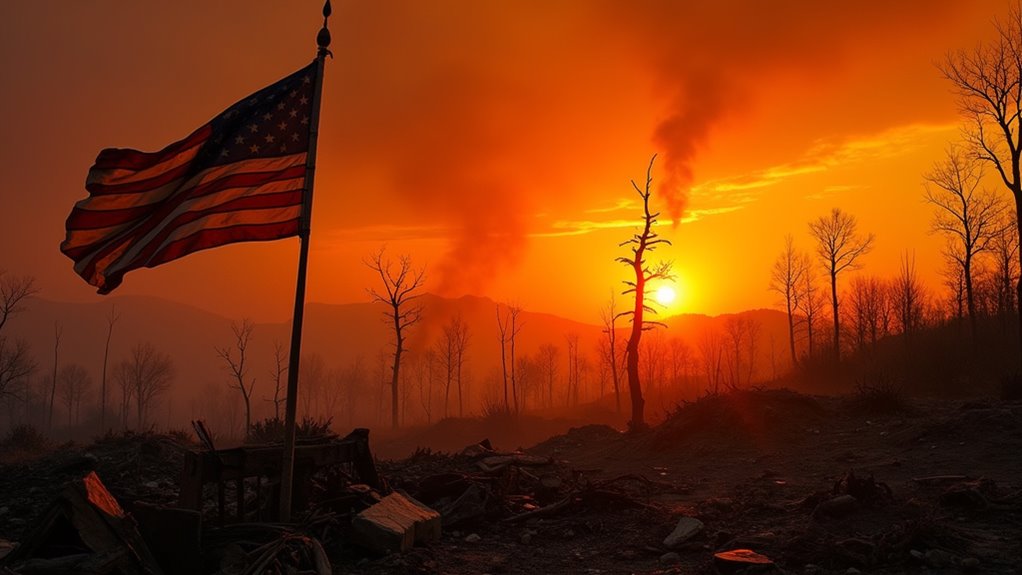
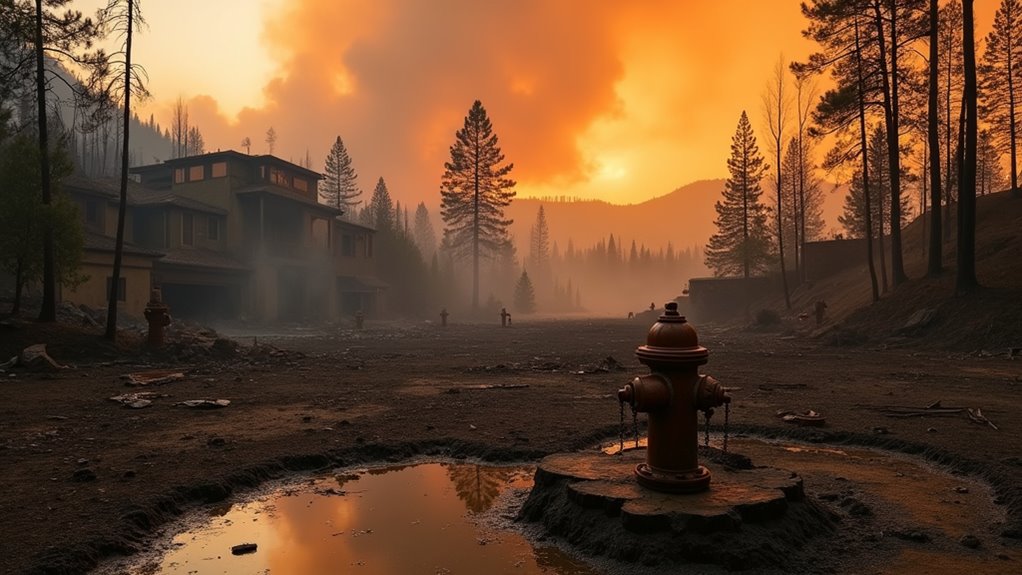
In a landmark ruling, the Los Angeles Superior Court has decided that the Los Angeles Department of Water and Power (LADWP) must face a mountain of lawsuits from fire victims. Judge Samantha Jessner‘s decision allows hundreds of claims to proceed under a unique California law that highlights the inadequacy of water supply during emergencies. This ruling stems from the devastating 2025 wildfire that tore through the Pacific Palisades, a place where luxury homes once stood.
Now, it’s a scene of smoke and ashes, with damage estimates soaring into the tens of billions. The fire, fueled by ferocious winds, was exacerbated by the fact that the city’s reservoir had been drained for repairs. Yes, you heard that right. Fire hydrants with insufficient pressure during a raging inferno. What a brilliant plan! Victims are now pointing fingers at LADWP, claiming that the utility’s negligence directly contributed to their losses.
A city’s reservoir drained, fire hydrants failing—LADWP’s negligence ignites outrage as victims demand accountability for catastrophic losses.
And they’re not just whining; they’re pursuing serious claims against the nation’s largest public utility. The case, titled Grigsby v. City of Los Angeles, challenges LADWP’s responsibility to provide adequate water supply in a crisis. It’s hard to believe that in a city known for its beaches and palm trees, basic utilities can fail so spectacularly. This ruling overcame staunch objections from LADWP lawyers, who probably thought they could weasel out of responsibility. But here we are.
Meanwhile, the Eaton Fire has been no walk in the park either. It claimed 19 lives and left thousands homeless. A loose Edison transmission line was the culprit, igniting the blaze in the first place. State regulators were not amused, citing Edison for 26 safety violations post-fire. In a striking parallel, Edison is currently under investigation for its involvement in the Eaton Fire incidents, which adds further pressure on the utility.
In the wake of these disasters, inadequate water supply issues are now under intense scrutiny, reflecting a broader concern for public safety during emergencies. Property owners affected by the fires are now grappling with the reality that standard homeowners insurance does not cover flood damage, requiring separate flood insurance for complete protection.
So, while LADWP is now sweating bullets, Edison is also facing its own share of mass tort lawsuits. In a twist of irony, the victims are pursuing compensation for everything from destroyed property to emotional distress, but guess what? Those lawsuits are separate from insurance claims.