
Design Highlights
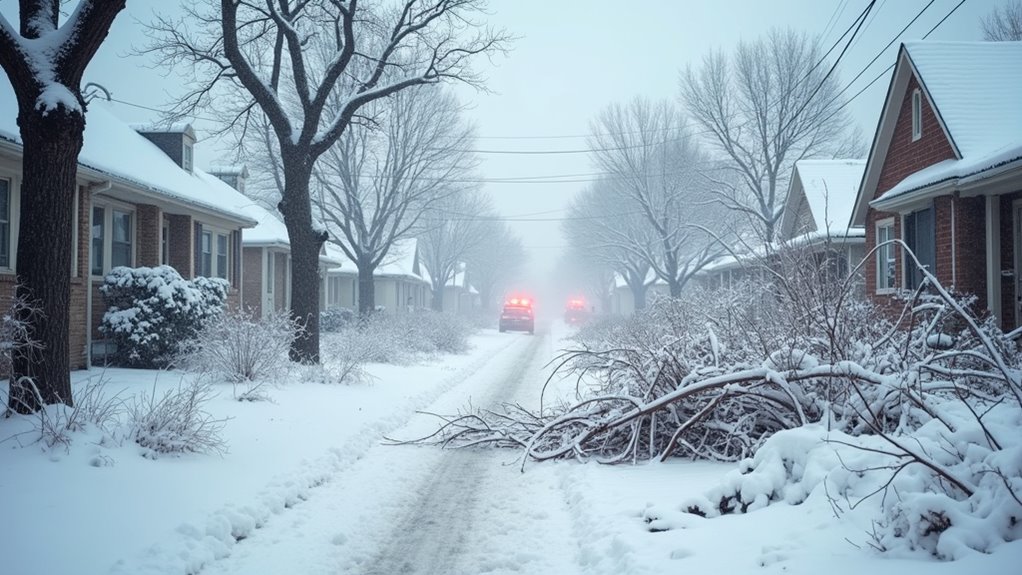
- Allstate reported a $175 million pretax loss in January 2026 primarily due to the impacts of Winter Storm Fern.
- This loss marks a significant decrease from the $1.08 billion pretax losses in January 2025, driven by California wildfires.
- The company faced challenges in commercial lines, with a 14.2% year-over-year decline in policies.
- Premium adjustments are anticipated post-storm claims, impacting future financial performance and investor sentiment.
- Allstate’s market cap stands at $54.5 billion, reflecting low valuation despite maintaining dividends for 34 years.
Allstate kicked off 2026 with a bang—or, more accurately, a crash. The insurance giant announced a staggering $175 million pretax loss for January, thanks mostly to the wrath of Winter Storm Fern. That’s right, a storm named Fern wreaked havoc, causing chaos and financial fallout. The after-tax hit? A neat $138 million. Not exactly the kind of New Year surprise anyone hopes for, especially when you consider the company’s history of far more catastrophic losses in previous years.
In January 2025, Allstate faced a whopping $1.08 billion in pretax losses. Remember the California wildfires? Yeah, those were a real party crasher. Fast forward to January 2026, and the losses are considerably lower, but still painful. The announcement came through a monthly release on February 19, 2026, filed as a Form 8-K with the SEC. So, clearly, they didn’t just sweep this under the rug.
As for policies, Allstate had 38,262 thousand policies in force as of the end of January. That’s flat compared to December 2025 but still up 2.2% year-over-year. Total policies in force are crucial for assessing the company’s growth trajectory. Multi-car customers are likely having a laugh, generating multiple policy counts. But commercial lines? Ouch. Those dropped to 175 thousand policies. Not exactly a bright spot in the report.
The auto policies, which typically make up the bulk of Allstate’s business, totaled 25,484 thousand. That’s a slight dip from the previous month but up 2.6% from a year ago. Higher average premiums helped, but who are we kidding? Storms like Fern make drivers think twice about hitting the road. Interestingly, the decline in commercial lines policies indicates the need for strategic reevaluation in underwriting.
Homeowners policies fared slightly better, ticking up to 7,709 thousand. Yet, even this segment can’t escape the storm’s impact. Other personal lines took a small hit, while commercial lines saw a year-over-year decline of 14.2%. Premium increases following catastrophic events like Winter Storm Fern often occur at policy renewal rather than immediately after claims are filed.
Allstate’s market cap? A solid $54.5 billion. The P/E ratio stands at 5.5, which, let’s face it, isn’t exactly a blockbuster number. On the bright side, the company has kept its dividends flowing for 34 years.
But let’s be real: with $175 million in losses, investors are certainly feeling the chill of Winter Storm Fern. So, while the company might have weathered worse storms before, this one still stings.