
Design Highlights
- Cyberattacks disrupt patient care, with over 60% of healthcare organizations reporting service interruptions due to cybersecurity incidents.
- Compromised medical records can manipulate treatment decisions, increasing risks and jeopardizing patient safety.
- Ransomware attacks are expected to escalate, intensifying the threat to patient safety and operational integrity.
- Trust in healthcare providers diminishes with repeated cyber incidents, affecting patient willingness to seek care.
- The financial burden of data breaches diverts resources away from patient care, further exacerbating safety concerns.
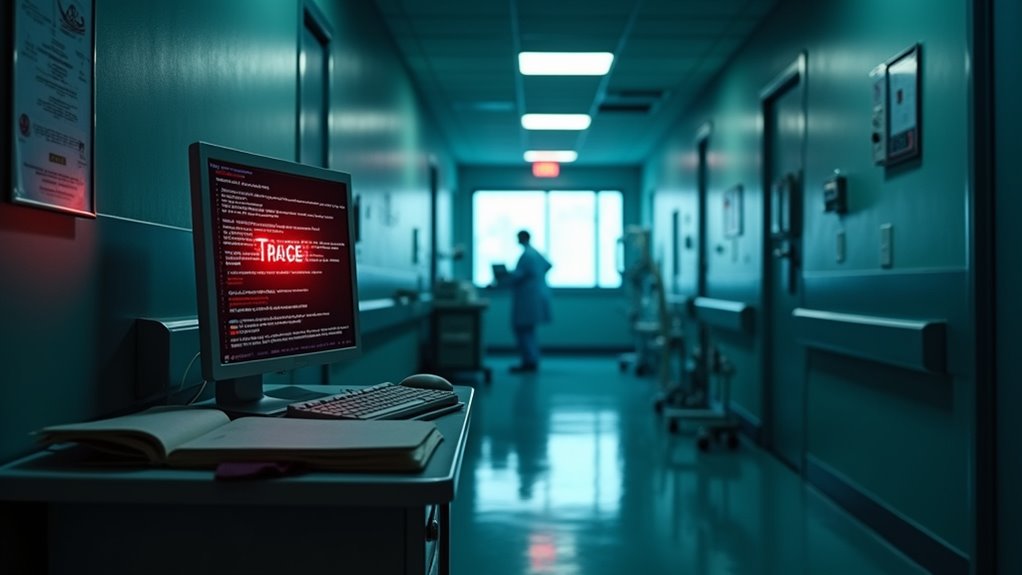
In a world where health care is supposed to prioritize patient safety, it’s alarming how cyber risk has become an unwelcome guest at the table. In 2024 alone, the healthcare sector faced the largest data breach year on record, affecting a staggering 276 million patient records. That’s nearly 70% of the U.S. population. Imagine that! One in three people. It’s hard not to feel a little uneasy when your medical history is floating around in cyberspace, right?
In 2024, cyber risk overshadowed patient safety, impacting 276 million records—nearly 70% of the U.S. population.
Breaches are no longer just a nuisance; they are a crisis. In 2025, the number of healthcare breaches skyrocketed over 110% compared to the previous year. Ransomware attacks—those nasty little things—rose by 128% from 2020 to 2024. Who knew that healthcare would become the second most targeted industry? In 2024, it accounted for 17% of all monitored attacks. That’s quite the statistic when you think about it.
And what’s the top threat? Ransomware, of course. The criminals have gotten creative, with Ransomware-as-a-Service (RaaS) making it easy for anyone to jump into the game. Phishing? Yeah, that’s still the bread and butter of cybercrime, accounting for 40% of incidents in 2024. It’s like a buffet of risks, and everyone’s invited.
What’s the impact on patient safety? Over 60% of healthcare organizations reported that cyberattacks disrupted patient care. That’s right—cybercriminals can manipulate medical records, dosing, and even surgical devices. It’s hard to trust that your doctor has your best interests in mind when they’re battling hackers on the other side of the screen. In fact, the total number of individuals affected by breaches in 2025 exceeded 35 million individuals, highlighting the severity of this ongoing issue. Moreover, compromised medical records can delay treatment, further exacerbating the risks to patient safety.
Financially, the average cost of a healthcare data breach reached nearly $11 million—more than any other industry. Phishing breaches alone averaged about $9.77 million. Imagine explaining that to a hospital board. These costs often include legal costs and damages associated with addressing the breach and its consequences.
But the worst part? These breaches don’t just cost money; they compromise patient care. Disruptions lead to delays, and trust? That’s quickly eroded. With predictions for 2026 showing ransomware entering an aggressive phase, and cyber resilience becoming a board-level metric, one has to wonder: what’s next?
As healthcare grapples with these relentless cyber threats, the line between cyber risk and a patient-safety crisis blurs. And that’s a line no one should be comfortable crossing.