
Design Highlights
- India is under pressure to approve four additional Russian insurers by the Friday deadline to avoid operational disruptions in oil transport.
- The U.S. is urging India to cut Russian oil purchases, potentially influencing India’s decision on insurer approvals.
- Alternative insurance options exist, reducing reliance on Russian insurers and mitigating risks associated with operating without proper coverage.
- Delays in approvals could lead to significant fines for tanker operators, impacting India’s energy supply chain and global oil flows.
- The geopolitical landscape is shifting, with increased scrutiny on shadow fleet activities further complicating insurance and shipping operations.
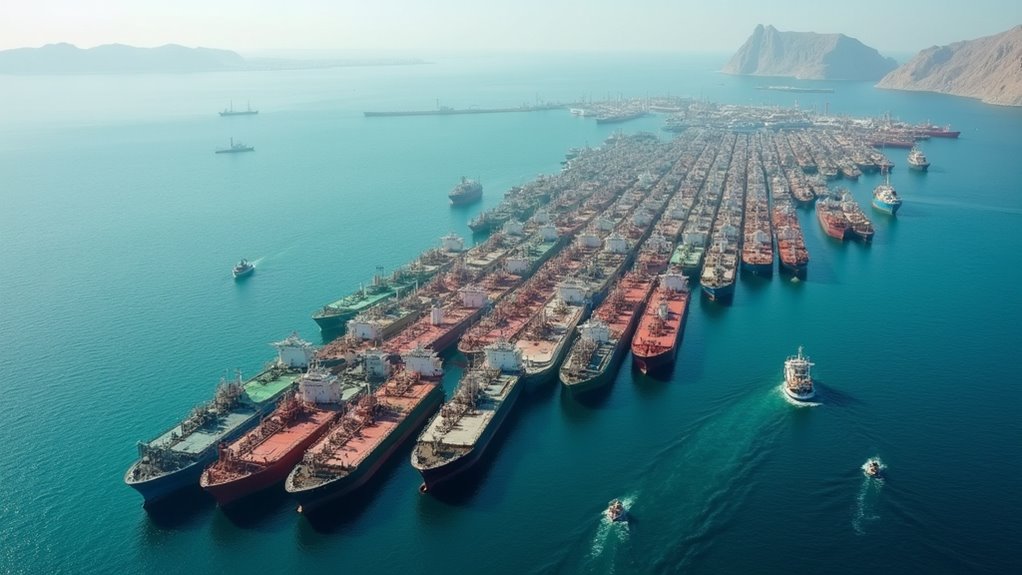
As the clock ticks down, India finds itself at a crossroads, teetering on the edge of a risky gamble with Russian oil tankers. The stakes couldn’t be higher. With the Directorate General of Shipping facing a decision on whether to extend approvals for four Russian insurers, the pressure is palpable.
India stands at a pivotal moment, weighing risky decisions on Russian oil tankers as approval deadlines loom dangerously close.
Sberbank Insurance Company Ltd. and Ugoria Insurance Group have thrown their hats in the ring, hoping to join the ranks of approved Russian insurers. If granted, that count would rise to a total of eight. But here’s the kicker: the clock is running out. A Friday deadline looms like a storm cloud overhead.
On the other side of the equation, the U.S. administration is breathing down India’s neck, urging it to cut back on Russian oil purchases. It’s a classic case of political tug-of-war. The American push aims to deprive the Kremlin of those sweet, sweet petrodollars.
And while India has been playing it cool, recent actions hint at a possible shift. The U.S.-India trade negotiations have nudged India to reconsider its position on Russian crude. It’s a delicate dance, and the music could stop at any moment.
If the approvals get denied, the situation isn’t entirely bleak. Four other Russian insurers still hold valid approvals until 2029 and 2030, and there’s a buffet of Western and alternative insurance options available.
Let’s not forget the shadow fleet—those sneaky oil tankers using fake flags and policies to transport crude from sanctioned countries. It’s like a game of hide-and-seek, except the stakes involve global energy markets.
In a surprising twist, India’s navy has already seized three shadow fleet tankers linked to Russia, Venezuela, and Iran. It’s an eyebrow-raising move that signals a potential reevaluation of India’s close ties with Russia.
Could this be the first domino in a series of seizures? The geopolitical landscape is shifting, and 2026 might see a surge in enforcement actions from the U.S., Europe, and India.
Yet, delays in approvals due to documentary deficiencies add uncertainty to the mix. This decision impacts not just India’s energy supply but also its relations with Russia and global oil flows. Operating without proper business insurance could expose tanker operators to fines ranging from $10,000 to $100,000 or even more severe penalties in various jurisdictions.