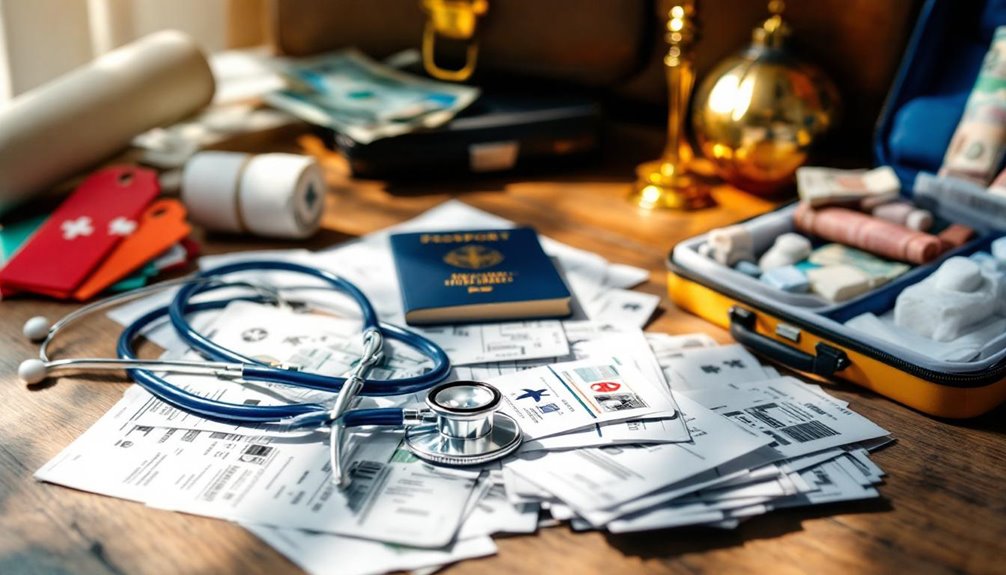

Travel insurance covers medical emergencies abroad—think hospital stays and doctor visits with plans up to $2 million. It reimburses prepaid expenses when trips get cancelled due to illness or family emergencies. Lost luggage gets covered up to $2,500, while baggage delays bring $200 to $500 for essentials. Emergency evacuations can hit $1 million in coverage. Some plans include accidental death benefits reaching $100,000 for flight accidents. The specifics depend entirely on which policy gets purchased and what fine print lurks within.
Design Highlights
- Medical emergencies including hospital stays, doctor visits, and emergency dental care, with coverage ranging from $25,000 to $2 million.
- Trip cancellation and interruption reimbursement for prepaid expenses due to sudden illness, family emergencies, or missed connections.
- Lost or delayed luggage protection up to $2,500, plus reimbursement for essential items during baggage separation.
- Emergency medical evacuation and repatriation services covering up to $1 million for serious medical situations or natural disasters.
- Accidental death and dismemberment benefits ranging from $30,000 for non-flight incidents to $100,000 for flight-related accidents.
Travel insurance isn’t exactly the most thrilling part of planning a vacation, but it’s the safety net that keeps a dream trip from turning into a financial nightmare.
Medical emergencies top the list of what travel insurance actually covers. Plans range wildly from $25,000 to $2 million depending on what someone’s willing to pay. This includes hospital stays, doctor visits, and treatment for those unexpected illnesses that always seem to strike at the worst possible moment.
Medical coverage ranges from $25,000 to $2 million—because unexpected illnesses don’t care about your vacation plans.
Emergency dental coverage is thrown in too, though it’s pretty modest—$100 to $750 for things like chipped teeth. Medical evacuation and repatriation services can reach up to $1 million for transporting sick travelers to appropriate facilities. There’s also 24-hour medical assistance and support for flying family members in during serious hospitalizations.
Trip cancellations get reimbursed under extensive plans. All those prepaid, non-refundable expenses—airfare, hotels, rental cars—can be recovered if covered reasons force cancellation. We’re talking sudden illnesses, family emergencies, and other qualifying disasters.
The catch? Pre-existing conditions usually don’t count unless policies are purchased within specific timeframes and include waivers.
Travel delays and missed connections aren’t fun, but at least there’s coverage for meals and accommodations during significant flight delays. Missed connection benefits help travelers catch up to their itineraries.
Trip interruption coverage kicks in for delays that happen mid-journey. Most extensive plans bundle this stuff together. Coverage for interrupted trips typically ranges from $0 to $10,000 depending on the policy selected.
Lost luggage coverage exists, but don’t get too excited. Limits typically max out at $2,500, with some budget plans offering a measly $750. Baggage delay coverage provides $200 to $500 for temporary separations from luggage.
Travel documents fall under this umbrella too. Reimbursement covers essential items needed when bags go missing.
Emergency evacuation goes beyond just medical situations. Up to $1 million covers transport to the nearest appropriate medical facility.
Repatriation of remains brings deceased travelers home. Some plans even cover non-emergency evacuations for natural disasters or civil unrest. Hurricane coverage reimburses non-refundable expenses if purchased before the hurricane is named, though once named it becomes a foreseeable event that may exclude claims. Coverage starts once premiums are paid, which needs to happen before the trip dates to ensure valid claims.
Escort coverage reaches $25,000 for companions during medical evacuations.
Accidental death and dismemberment rounds out the coverage options. Non-flight incidents are covered up to $30,000 in selected plans. Flight accidents bump that number to $100,000.
It’s the grim stuff nobody wants to think about, but it’s there. Coverage applies to loss of limbs or death during vacation periods—because apparently, even relaxation comes with risks.
Frequently Asked Questions
Does Travel Insurance Cover Trip Cancellations Due to Work Schedule Changes?
Travel insurance might cover trip cancellations due to work schedule changes, but it’s not guaranteed.
Most standard policies only cover specific work scenarios—think job loss, military duty, or permanent transfers. Some insurers include unexpected work requirements or mandatory schedule changes, though that’s not universal.
The catch? Documentation is required, usually a notarized employer statement.
If the standard policy doesn’t cut it, Cancel for Any Reason coverage exists, reimbursing 50-75% of costs. It’s situational.
Are Pre-Existing Medical Conditions Covered by Standard Travel Insurance Policies?
Standard travel insurance policies don’t cover pre-existing medical conditions. Period.
Most insurers flat-out exclude them unless travelers purchase a specific waiver. Without that waiver, any medical costs tied to existing health issues—diabetes, hypertension, asthma, whatever—aren’t covered.
Even death from a pre-existing condition gets excluded.
The catch? Travelers must buy coverage within 14-15 days of their initial trip deposit, and their condition must be stable.
No exceptions, no shortcuts.
Does Travel Insurance Cover Lost or Stolen Personal Belongings During Trips?
Yes, travel insurance typically covers lost or stolen personal belongings—clothing, electronics, passports, the works.
But there’s a catch. Coverage limits are usually modest, around $750 total and $250 per item for standard plans.
High-value stuff like jewelry or laptops? Lower limits or special endorsements needed.
Leave valuables unattended or skip the police report? Claim denied.
Original receipts matter too—without them, expect only 50% reimbursement.
It’s coverage, sure, but with strings attached.
Can I Purchase Travel Insurance After Already Starting My Trip?
Yes, some insurers will sell travel insurance after a trip starts, even while abroad.
But here’s the catch: coverage is usually limited to medical emergencies.
Trip cancellation? Forget it—that ship has sailed.
Pre-existing conditions? Probably not covered.
Many policies come with waiting periods before certain benefits kick in, and some won’t sell on departure day at all.
A few providers specialize in post-departure plans, but expect bare-bones coverage compared to buying early.
Medical-only is the name of the game here.
Does Travel Insurance Cover Adventure Sports Like Skiing or Scuba Diving?
Standard travel insurance? Nope, won’t cover skiing or scuba diving. Those are considered risky business.
But specialized adventure travel insurance exists specifically for this stuff. It’ll cover injuries from recreational skiing, snowboarding, and scuba diving—usually up to 10 meters depth with proper certification.
Medical expenses, equipment damage, even emergency evacuation. Just keep it recreational.
Professional competitions? Forget it. And don’t show up drunk expecting coverage. That’s a hard no.