
Design Highlights
- The surplus lines market in California surged from 6% to 20% of the commercial market, indicating a significant shift in insurance dynamics.
- A dramatic increase in new policy counts, rising from 50,000 in 2023 to 320,000 in 2025, reflects growing demand for surplus lines coverage.
- Surplus lines are crucial in addressing coverage gaps left by standard markets, especially in fire-exposed and high-risk areas.
- The rise of legal risks and nuclear verdicts has pressured traditional commercial insurance, prompting businesses to seek surplus lines alternatives.
- SLACAL’s oversight and regulatory guidance support innovation and stability in the surplus lines market, helping it adapt to evolving risks.
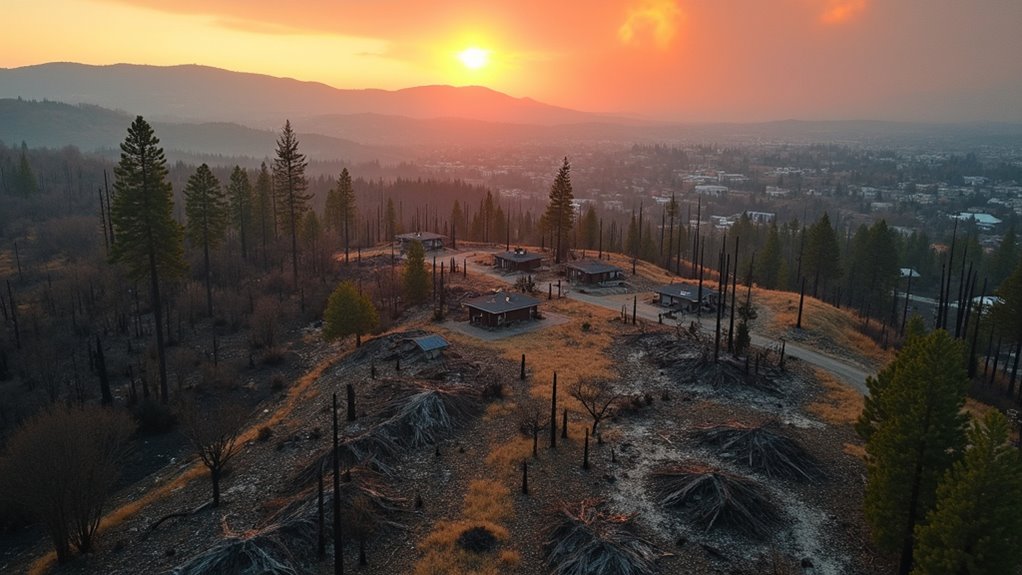
California’s surplus lines market is on fire—literally and figuratively. With wildfires blazing through the Golden State, the insurance landscape is undergoing a radical transformation. It’s not just a trend; it’s a full-blown structural shift. The surplus lines sector has skyrocketed from a mere 6% to a whopping 20% of the commercial market.
That’s right, folks—new policy counts have exploded by over 500% in just a few short years. In 2025, there were 320,000 new policies, up from a paltry 50,000 in 2023. Talk about a surge!
New policy counts have skyrocketed over 500%—from 50,000 in 2023 to 320,000 in 2025! What a remarkable surge!
Why the sudden rush? Blame the wildfires. Fourteen of the top 20 destructive wildfires in the last decade have made insurance companies rethink their strategies. The standard market is pulling back, especially in urban and suburban areas, leaving a gaping hole that surplus lines are keen to fill. These lines are not just about covering fire-exposed properties; they’re central to risk placement and capital deployment. California has become the gravitational center for the global excess and surplus (E&S) ecosystem.
In 2025, surplus lines processed over $1.6 million policy transactions and raked in more than $24 billion in premiums. That’s serious money! The average assessed value of homes dropped from $900,000 to $800,000, and premiums even fell by 14.5%. This decline in average premiums reflects the adaptive strategies homeowners are employing in this chaotic market. The surplus lines are keeping homes insurable while the standard market retreats. It’s a systemic shift, not just a momentary hiccup.
The commercial side of things is no less chaotic. Since 2014, growth in surplus lines has been steady, now capturing 20% of the commercial insurance market. Legal risks and nuclear verdicts are shaping casualty capacity, while businesses are facing higher costs and less capacity due to third-party litigation funding. It’s a mess out there! Additionally, the structural shift noted indicates a sustained change rather than a transient cyclical correction. Much like the long-term care insurance industry that now has fewer than 15 active carriers, California’s standard insurance market is experiencing significant consolidation as carriers exit high-risk areas.
Enter SLACAL, the oversight organization keeping tabs on this $20+ billion surplus lines marketplace. They act as both a market stabilizer and an early-warning system. Their 2025 Annual Report, titled “All In on California’s Surplus Lines,” highlights the health of the market and the emerging risks.
In a nutshell, California’s surplus lines market is rewriting the insurance rulebook. It’s adapting to chaos, absorbing demand where others fear to tread. And while wildfires may be wreaking havoc, they’ve also sparked a revolution in how insurance operates. Who knew destruction could lead to such innovation?