
Design Highlights
- Tesla is discontinuing Model S and X to focus resources on the high-demand production of Optimus robots.
- The shift represents Tesla’s strategic pivot towards automation and robotics to enhance efficiency in manufacturing processes.
- Optimus robots are designed to take over mundane tasks, reducing workplace injuries and improving productivity.
- Tesla plans to produce 1 million Optimus units annually, leveraging repurposed factory lines previously used for Model S and X.
- The transition aims to lower production costs, making Optimus robots competitively priced in the market.
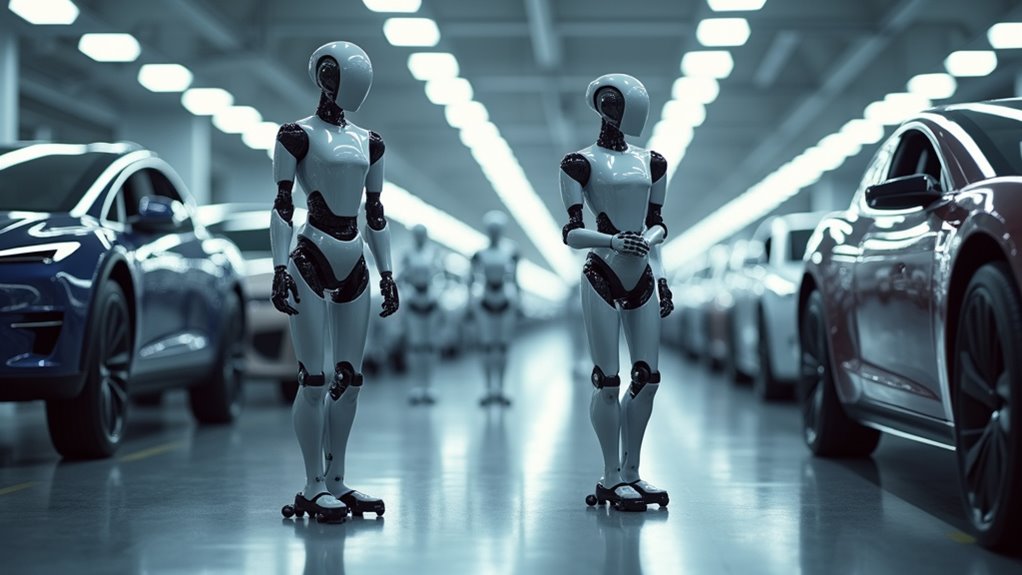
Tesla is flipping the script on robotics with its ambitious push into the world of Optimus robots. In January 2026, the company kicked off mass production of the much-anticipated Optimus Gen 3 at its Fremont plant.
Initially, output was described as “agonizingly slow.” But, hey, Rome wasn’t built in a day, right? With major upgrades from its predecessor, Gen 3 is designed for mass production. The goal? A whopping 1 million units annually, thanks to the conversion of Model S and X lines. Yep, those beloved cars are being put out to pasture.
Output may be slow, but with major upgrades, Gen 3 aims for a staggering 1 million units annually!
The discontinuation of Model S and X production globally in Q2 2026 is a bold move. The entire Fremont factory is being repurposed for Optimus. No, they’re not laying off workers. In fact, more employees will be needed. So, for all the doomsayers, breathe easy.
Optimus will be deployed mainly for mundane tasks. Remember, it’s designed for the boring, repetitive stuff humans dread. This general-purpose factory helper is aimed at reducing injuries for human workers by taking over unsafe tasks. With the support of established suppliers in China, Tesla is poised to enhance its production capabilities for Optimus.
Production lines are gearing up for a massive output. The Fremont line aims for that sweet 1 million units per year target, while Giga Texas is dreaming big with a goal of 10 million units of Optimus V4.
They’re aiming high, with projections of 100 million units down the line. But don’t expect that kind of volume until late 2026. Patience is a virtue, after all.
Cost is a big deal too. Tesla’s aiming to keep production costs around $20,000 to $30,000 per unit. That’s a pretty competitive price, especially when you consider many advanced humanoid robots cost a small fortune.
They’re treating Optimus like a mid-range electric car. Smart move, right? Investments in batteries and chips are all part of the plan to hit those cost goals. Just as monthly premiums help spread the financial burden of unexpected expenses in other industries, Tesla’s strategy spreads investment costs across massive production volumes.
Optimus is no slouch either. It’s expected to perform over 3,000 tasks—everything from parts kitting to battery line inspection. Learning by observing humans, it’s like a toddler without the tantrums.
Sure, it can’t do any useful work yet, but give it time.
And let’s not forget the supply chain. Tesla is still reliant on Chinese suppliers for robotics components. A pivot to US manufacturing is in the works, but that dependence isn’t vanishing overnight.