
Design Highlights
- The Demolition Fund, established in 2021, is now facing funding shortages as of January 2026, halting state support for demolition efforts.
- Approximately 8,000 structures remain in need of demolition across West Virginia, with an estimated cost of $150 million to address them.
- Local governments are struggling to manage demolition costs independently, leading to financial burdens and liability claims affecting their budgets.
- Phase One and Phase Two of the program successfully demolished around 1,800 structures, but many communities still have plans on hold.
- Alternative funding sources, like the Property Rescue Initiative, have strict eligibility requirements, leaving many municipalities without necessary financial support.
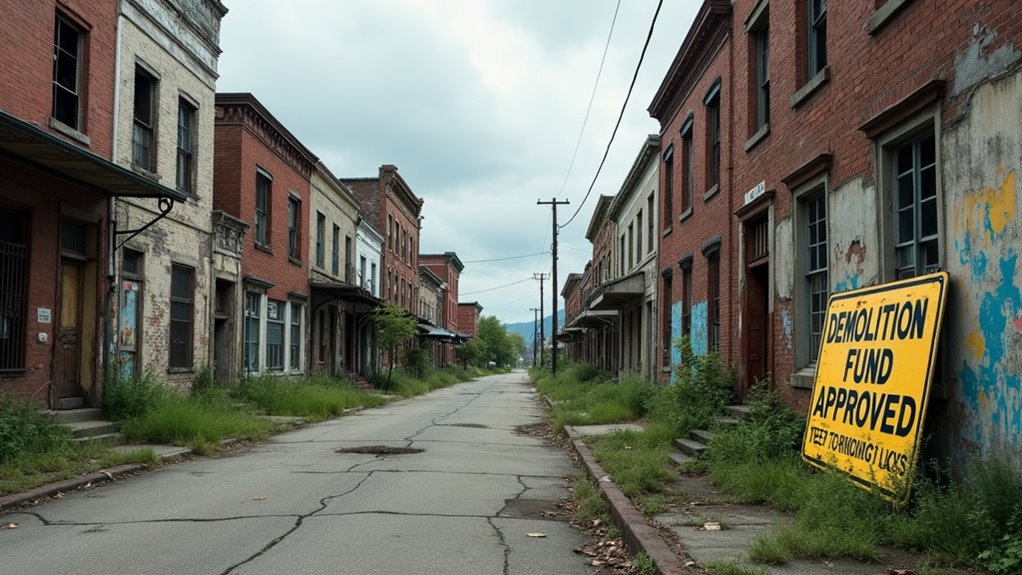
In a state where abandoned buildings seem to multiply like weeds, West Virginia’s Demolition Fund for Abandoned Buildings has been both a lifeline and a reminder of the challenges that lie ahead. Established in 2021 and funded in 2022 with a nice chunk of federal COVID-19 recovery cash, this program was designed to help local governments tackle the ugly problem of dilapidated structures.
It’s managed by the Department of Environmental Protection, which, let’s be honest, has had its work cut out for it. With an initial $30 million to play with, the program aimed to address safety risks and blight across multiple communities.
Phase one of this ambitious plan cost about $10 million, demolishing around 780 structures in just 26 communities. Not too shabby! Then came phase two, which tossed an additional $20 million to 68 participants, targeting over 1,000 more structures.
In just two years, the program managed to demolish roughly 1,800 eyesores. But here’s the kicker: as of January 2026, the last of the state funding has dried up. No more demolition program. No replacement funding. Municipalities are left to absorb the costs, which is a nice way of saying they’re stuck with the mess.
Currently, an estimated 8,000 residential and commercial structures still need to be demolished, with a whopping price tag of around $150 million dangling over their heads. It’s as if the state is playing a game of “let’s ignore the problem.” More than 80 communities, ready and willing to tackle 2,000 structures, have had their plans put on hold.
Meanwhile, cities like Charleston are left with a priority demolition list of about 30 buildings at a time. One county managed to tear down 75 dilapidated structures with state help—good for them, but it’s a drop in the bucket. In fact, local governments have been struggling to manage the costs associated with dilapidated buildings for years now.
To make matters worse, no legislation has been enacted to keep the program alive. So, what’s next? The WV Housing Development Fund has a Property Rescue Initiative, but eligibility is a whole other hurdle. Additionally, as the need for demolition remains pressing, an estimated additional funding need of $150 million is required for effective demolition efforts statewide.
And then there’s the REAP program, which has doled out over $9.2 million in grants. But let’s be real: it’s not enough. For municipalities trying to protect themselves from potential liability claims, the median cost of business liability insurance runs about $42 monthly, adding another financial burden to their already stretched budgets.
As the weed-like abandoned buildings continue to proliferate, one can’t help but wonder how long this game of demolition chicken can last. The need remains pressing, yet funding is evaporating. The irony is thick. West Virginia needs to wake up and smell the decay.