
Design Highlights
- Insured disaster losses dropped to $108 billion in 2025, down from $147 billion in 2024, indicating a significant shift in recovery dynamics.
- Weather-related disasters were responsible for 92% of total losses, highlighting the impact of climate events on insurance payouts.
- Wildfires in Los Angeles accounted for the highest insured losses at $40 billion, reflecting severe economic damage from non-peak perils.
- The Asia-Pacific region saw only $9 billion in insured losses, demonstrating coverage challenges in lower-income areas amidst $73 billion in total losses.
- Uninsured losses, particularly from floods, remain high globally, emphasizing the ongoing gaps in disaster insurance coverage.
In a surprising twist, global disaster losses have plummeted to a mere $108 billion in 2025—an impressive drop from the staggering $147 billion recorded just a year earlier. One might almost think the world was ready to celebrate, but hold on. While insured losses took a dive, the total economic losses still reached about $224 billion. Seems like it’s one step forward, two steps back.
Weather-related disasters, as usual, ruled the day, accounting for a whopping 92% of all losses. And let’s not forget, 97% of those insured losses came from weather-related events. Apparently, Mother Nature is still throwing tantrums.
Weather disasters dominated, making up 92% of losses—Mother Nature’s tantrums show no signs of letting up.
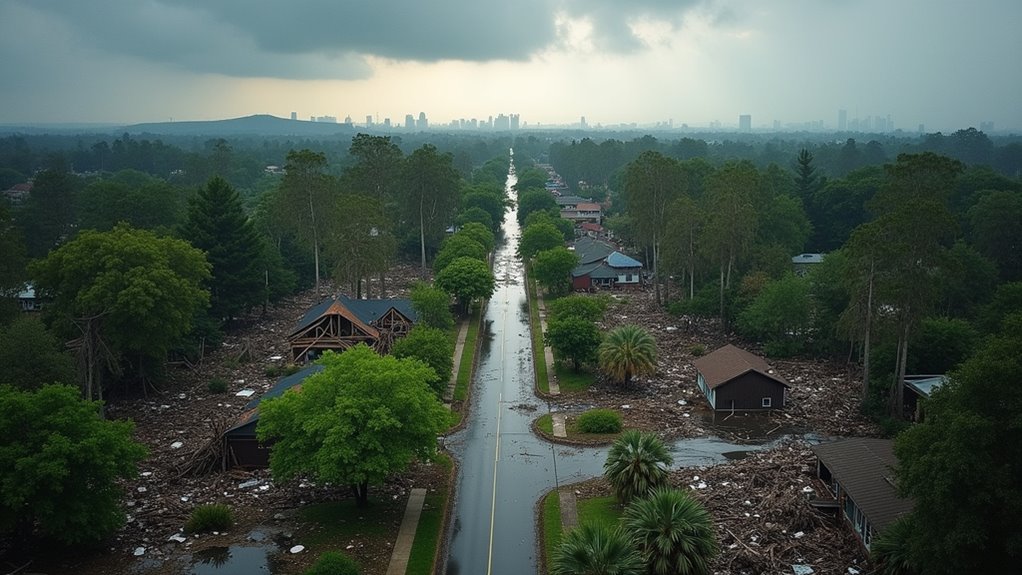
Non-peak perils like floods and wildfires caused about $166 billion in total losses. Insured losses from these non-peak events hit approximately $98 billion, exceeding long-term averages. It’s like a game of financial whack-a-mole—every time you think you’ve got it under control, another disaster emerges.
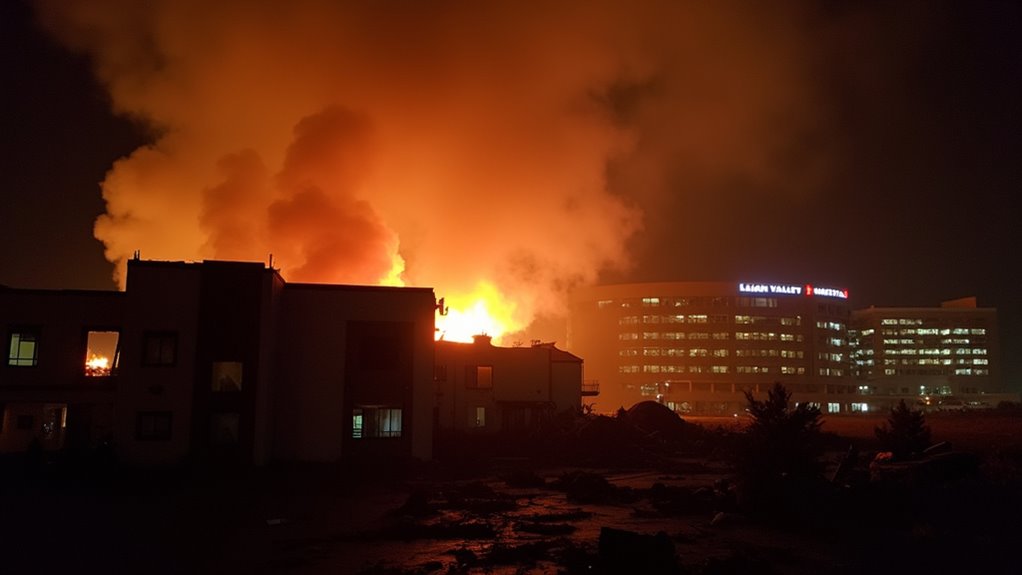
The wildfires in Los Angeles made headlines as the costliest disaster of the year, racking up $40 billion in insured losses. With 30 lives lost and overall economic damage hitting $53 billion, this event was a record-breaker. You have to wonder—will we ever get tired of breaking records for the wrong reasons?
Severe thunderstorms and tornadoes in the U.S. also left their mark, with insured losses reaching $42 billion. That’s considerably more than the 10-year average of $29 billion. Tornadoes in March and May alone caused billions in damage. So, yes, it was a rough year for those in the path of these storms.
However, the fatality count from natural disasters rose to 17,200 in 2025, a stark jump from 2024’s 11,000. But hey, at least it’s lower than the 10-year average of 17,800, right? Silver linings, folks. A massive earthquake in Myanmar was responsible for about 4,500 of those fatalities. It’s tragic, but the numbers tell a story.
Regions like Asia-Pacific saw $73 billion in losses, with a mere $9 billion insured. Africa, meanwhile, recorded a paltry $3 billion in losses, with less than one-fifth insured. Clearly, there’s a yawning protection gap in flood events, leaving 75% of losses uninsured. In fact, the insurable losses in the Asia-Pacific region were particularly low, highlighting the ongoing challenges in achieving adequate coverage in lower-income countries. Notably, uninsured losses fell below the 10-year average, particularly due to the California wildfires. For renters displaced by covered disasters, additional living expenses coverage can provide temporary housing and help maintain living standards during the recovery period.