
Design Highlights
- A New Year celebration at Le Constellation bar in Crans-Montana turned tragic with an explosion, resulting in 40 deaths and 119 injuries.
- Victims included young tourists from multiple countries, overwhelming local hospitals and leading to urgent medical responses across Europe.
- Swiss police launched an investigation into the explosion’s cause, with initial suspicions pointing to a champagne-related mishap.
- Global leaders expressed condolences and support, while discussions on improving safety protocols in nightlife venues are underway among Swiss and Italian authorities.
- The incident has prompted scrutiny on safety compliance and emergency response procedures in popular nightlife destinations.
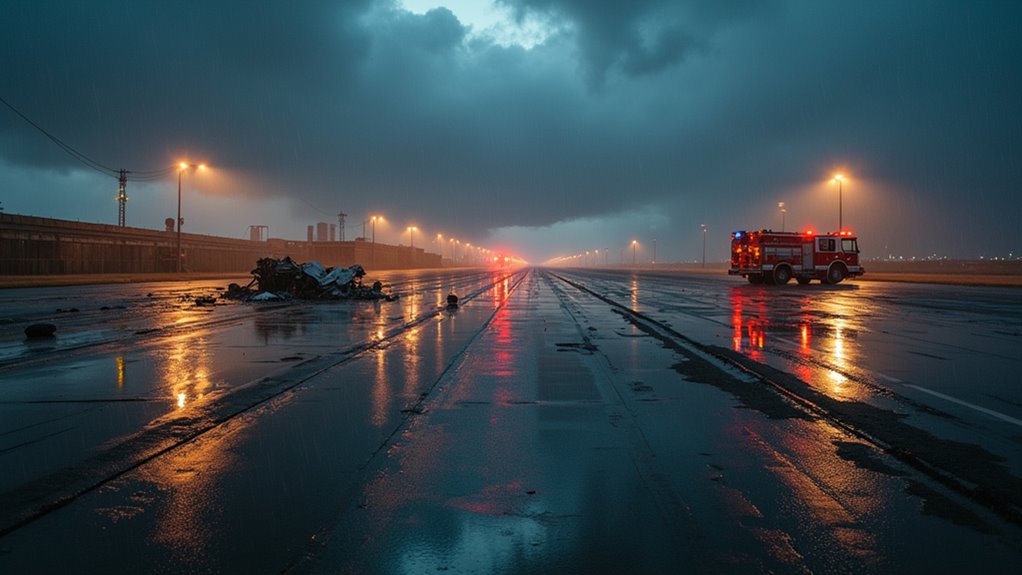
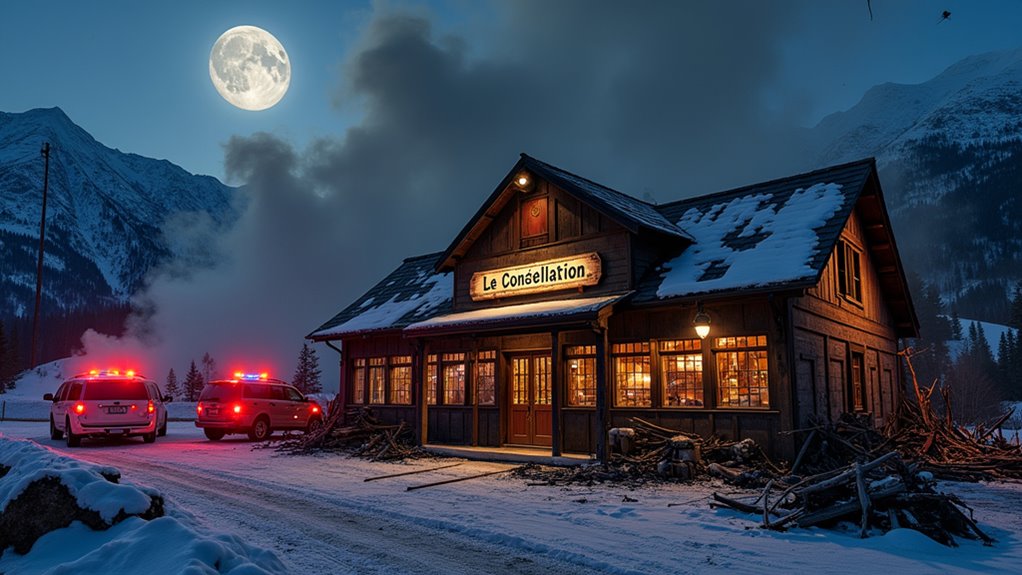
On January 1, 2026, a tragic fire erupted at the Le Constellation bar in Crans-Montana, Switzerland, during what was supposed to be a joyful New Year celebration. Instead of toasting to new beginnings, chaos broke loose as an explosion sent flames racing through a packed bar. The ski resort, typically a winter wonderland, turned into a nightmare at 1:30 AM CET. The blaze claimed 40 lives and injured 119 more, many severely. A real festive mood killer.
The victims? They were young, adventurous souls, including tourists from Belgium, Bosnia and Herzegovina, Finland, France, Italy, Israel, Luxembourg, Poland, Portugal, and Serbia. Quite the international gathering turned tragic. Hospitals were overwhelmed, struggling with the flood of injured party-goers. What a way to start the year, right? Initial fears of a higher death toll were confirmed as the grim count settled at 40.
A joyous New Year’s Eve turned tragic, claiming 40 young lives from across Europe in a devastating fire.
In the aftermath, Swiss police wasted no time launching an investigation, trying to figure out the cause of the explosion. Was it a champagne-fueled mishap gone wrong? Who knows? The Swiss were not alone in this; help rolled in from neighboring countries. The EU Civil Protection Mechanism was called into action, with 24 patients airlifted to hospitals across Europe. Italy even opened its burn unit in Milan to accommodate the injured. Talk about a logistical nightmare!
The reactions from world leaders were swift. French President Emmanuel Macron and German Foreign Minister Johann Wadephul expressed their shock and offered support, while Italian PM Giorgia Meloni lamented the tragedy for the Alpine region. Nice words, but they won’t bring back the dead, will they?
On January 2, Italian Foreign Minister Antonio Tajani visited Crans-Montana, likely searching for answers amid the ashes. As of now, the investigation is ongoing, with no clear answers about the fire’s origin. The ongoing discussions about the safety of nightlife venues have emerged as Swiss and Italian authorities work together to address the tragedy. The cooperation between Swiss and Italian authorities has been praised, which is great.
But in the end, it’s a painful reminder of a night that should have been celebrated. Instead, it became a grim chapter in the history of New Year’s Eve. Investigators are focusing on documentation and reporting procedures to determine if proper safety protocols were followed at the venue. As families mourn their loved ones, the world watches, waiting for answers that may never come.