
Design Highlights
- Global temperatures are projected to exceed 1.5°C by 2024, leading to unprecedented climate impacts and extreme weather events.
- Current emissions trends suggest a rise to 58 GtCO2e by 2030, far exceeding necessary climate targets.
- The ongoing El Niño phase is contributing to record temperature spikes, worsening climate variability and its associated risks.
- Technological advancements in renewable energy are not keeping pace with emissions growth, limiting effective climate mitigation.
- Economic pressures from climate change are projected to increase, with health care costs rising and GDP losses anticipated.
What’s it going to take for people to wake up? The temperature forecast for 2026 is looking pretty grim, with global averages predicted to soar between 1.34°C and 1.58°C above pre-industrial levels. That’s right—this year could be one of the hottest on record. And let’s not kid ourselves; we’ve already likely exceeded 1.4°C for the past three years. The reality is, we are racing toward a scenario where the Paris Agreement‘s target of keeping warming below 1.5°C is but a fading dream.
In 2024, we’re expected to hit that 1.5°C mark, making it the hottest year ever recorded. And guess what? 2025 is on track to follow suit, possibly tying with 2023 for second or third warmest. It’s like a climate horror movie, but nobody seems to be paying attention. The chances are that at least one year between 2025 and 2029 will blow past the 2024 record, with an 86% probability of exceeding that 1.5°C threshold. It’s not a question of “if” anymore; it’s “when.”
But don’t worry, current policies are projected to lead us to a cozy 2.8°C warming by the century’s end. That’s a 66% chance, and honestly, it feels like we’re on a runaway train heading straight for a cliff. Emissions are still on the rise, with a staggering 53 GtCO2e recorded in 2024, and they’re expected to reach 58 GtCO2e by 2030. Who needs a plan, right?
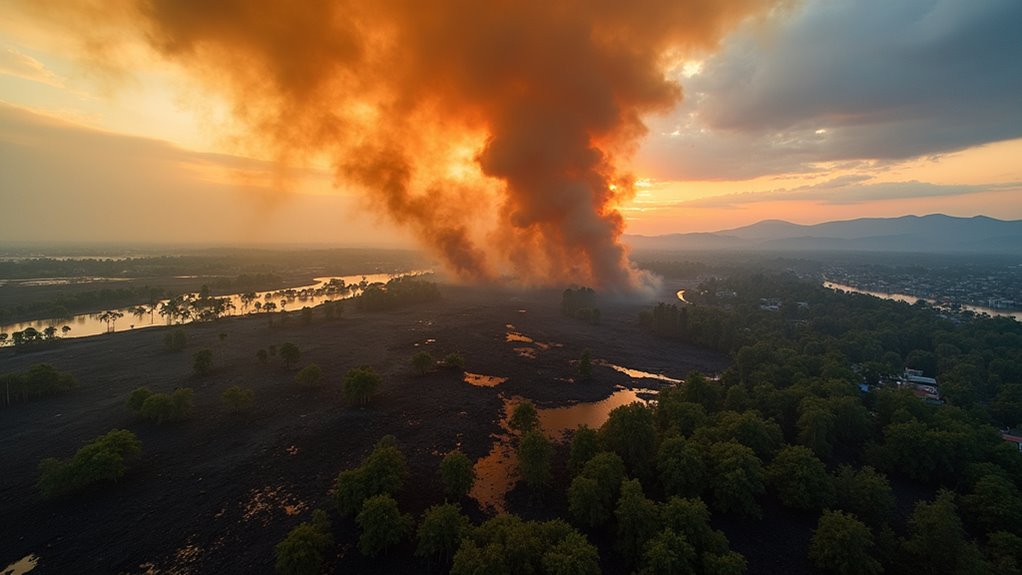
We’re also in an El Niño phase, which adds to the chaotic mix of temperature spikes. La Niña might be favored for a short period, but let’s be real; it’s not saving us from impending doom. The risk implications are terrifying—exceeding 1.5°C could lead to extreme weather, GDP losses, and increased mortality. Sounds like a fun time ahead! Exceeding 1.5°C is associated with severe climate impacts, emphasizing the urgent need for action. 2026 is likely to be the fourth consecutive year with temperatures 1.4°C above preindustrial levels, highlighting the critical nature of our current trajectory.
Despite a surge in electric vehicle sales—16.9 million sold globally by September 2026—mitigation efforts feel like a drop in the bucket. The world isn’t ready for what’s coming. And yet, the heat-trapping emissions keep climbing, driving us straight into the warmest years since 1850. Meanwhile, the financial burden extends beyond environmental costs, as employer-sponsored health care is projected to rise by 9% in 2025, adding economic pressure alongside climate challenges. It’s a race against time, and the finish line isn’t looking good. The question remains: when will people open their eyes?