
Design Highlights
- FEMA’s Risk Rating 2.0 updates flood insurance pricing to reflect individual property risks, moving away from outdated flood maps.
- While some homeowners see premium decreases, others face increases up to 18%, straining lower-income families.
- The rollout has led to a 39% decline in new NFIP policies, leaving many families uninsured and more vulnerable to flooding.
- Rising insurance costs create an affordability crisis, especially for poorer Americans, widening the flood protection gap.
- Critics warn that Risk Rating 2.0 may dismantle the emergency safety net, benefiting insurance companies amid increasing chaos.
FEMA’s Risk Rating 2.0 is shaking up the world of flood insurance, and not everyone is thrilled about it. In fact, many are downright panicking. This overhaul, the first major pricing update in over 40 years, promises to deliver rates that are more equitable and easier to understand. Sounds good, right? Well, hold that thought. It uses fancy technology to assess risk on an individual property level, moving beyond outdated flood maps. But as they say, the devil is in the details.
Implemented in phases, the new rating system rolled out starting October 1, 2021. New policies immediately fell under this new methodology, while existing policies had an adjustment period until April 2022. For some, that brought immediate premium decreases. For others, though? Not so much. Premiums could increase by 18% annually until they hit that full-risk rate. And here’s the kicker: some homeowners actually saw their rates drop post-implementation. But for many, especially those in lower-income brackets, the hike was too much to bear.
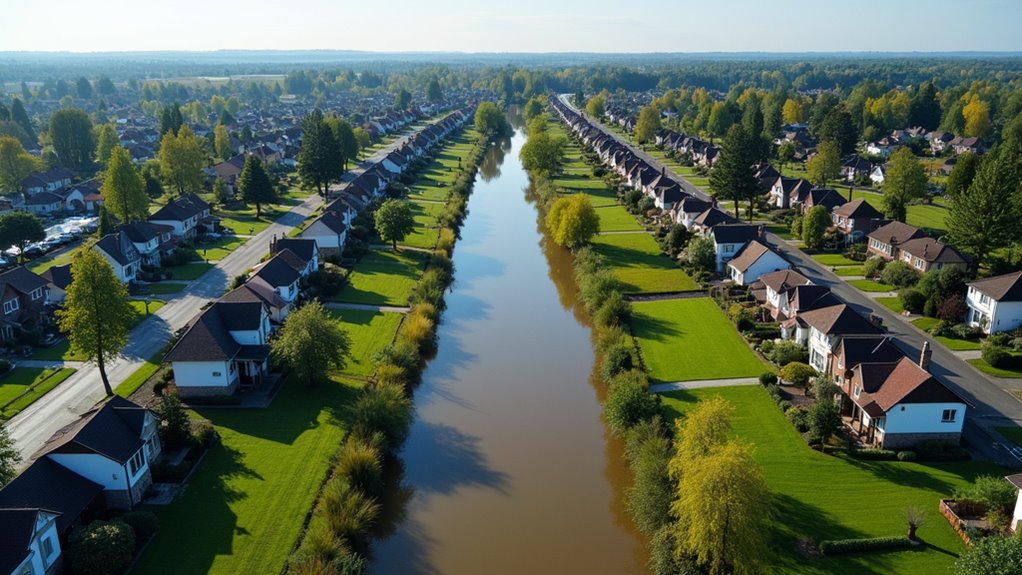
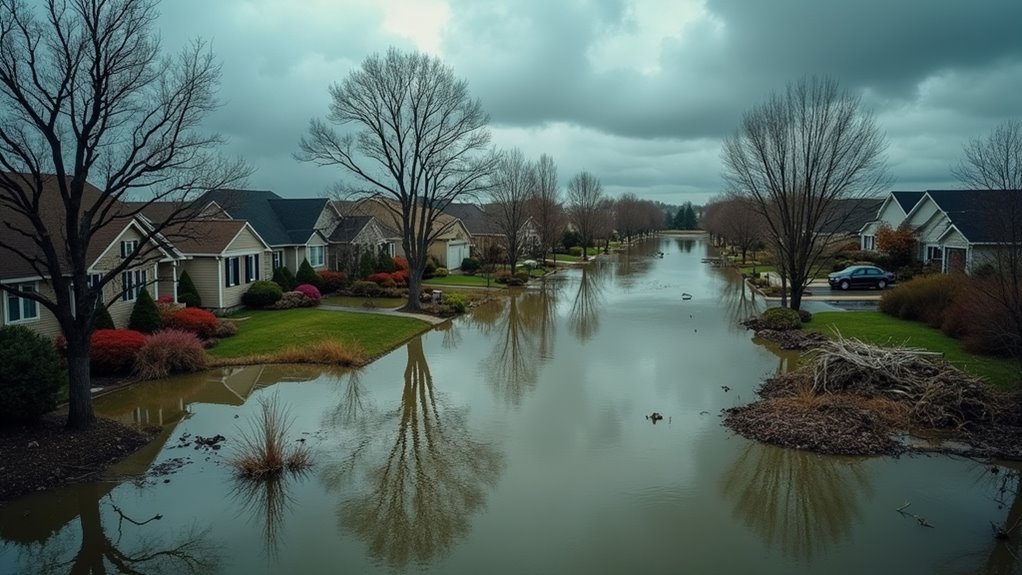
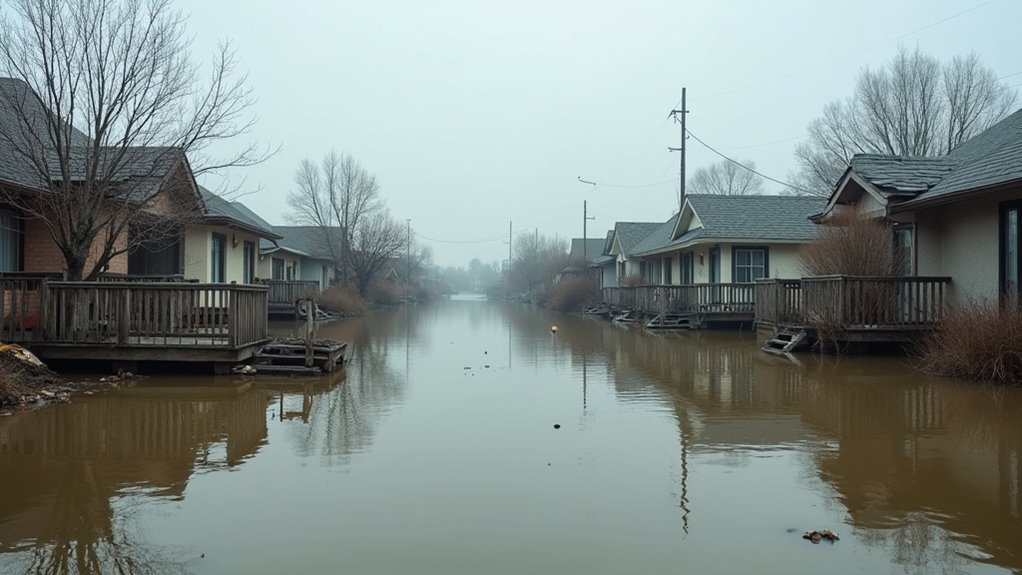
The new flood insurance rating system has left many homeowners facing steep premium hikes, hitting lower-income families the hardest.
The shift has led to a staggering drop in policy uptake—up to 39% fewer new NFIP policies since the rollout. That’s a big deal when floods are the nation’s most frequent disasters. You’d think people would want coverage, right? Apparently not. Lower-income households are disproportionately opting out, leaving them exposed to a growing flood risk. NFIP accounts for nearly 90% of residential flood coverage in the US, and critics are crying foul, warning that this could dismantle the emergency safety net that families rely on.
Equity was supposed to be a goal here, fixing long-standing pricing inequities based on property-specific flood risks. But the reality is stark: rising rates are pushing poorer Americans out of the program. Some may argue that it’s about time to modernize, but at what cost? The flood protection gap is widening, and that’s not just a statistic—it’s a looming disaster for many families. Risk Rating 2.0 was intended to address longstanding inequities in NFIP pricing, but its execution is leaving many vulnerable. Unlike renters insurance, which typically excludes floods from standard coverage, homeowners near flood zones face even steeper challenges navigating both coverage gaps and premium increases.
FEMA claims that this new system improves efficiency and provides clearer flood risk information for insurance decisions. But when people are dropping policies left and right, one has to wonder how effective that really is.
With enrollment falling and nationwide property insurance costs rising, the future looks murky. As families face financial peril from increased premiums, it’s hard to see this as a victory for anyone—except perhaps the insurance companies cashing in on the chaos.