
Design Highlights
- AI enhances risk assessment by analyzing real-time data, allowing insurers to better predict and manage weather-related home insurance claims.
- Automation through AI streamlines claims processing, reducing errors and delays, potentially saving 20% of time on claims activities.
- AI’s fraud detection capabilities improve claims integrity by cross-referencing data and identifying suspicious patterns, lowering costs for honest claimants.
- Consumer trust in AI is mixed; 64% demand transparency while many prefer human inspections over automated assessments.
- Insurers increasingly rely on AI to adapt to extreme weather, with 80% of executives optimistic about its role in profitable growth.
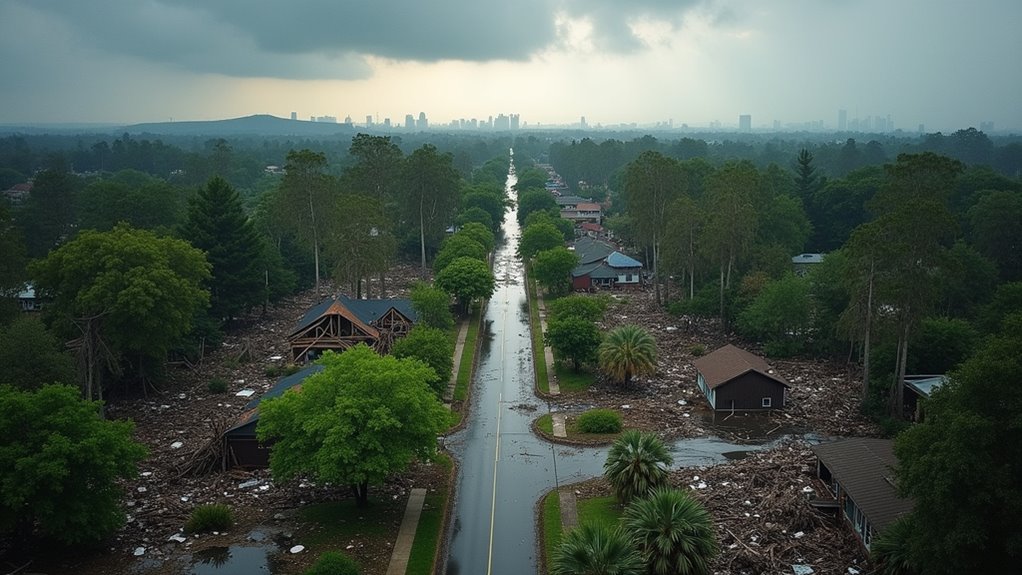
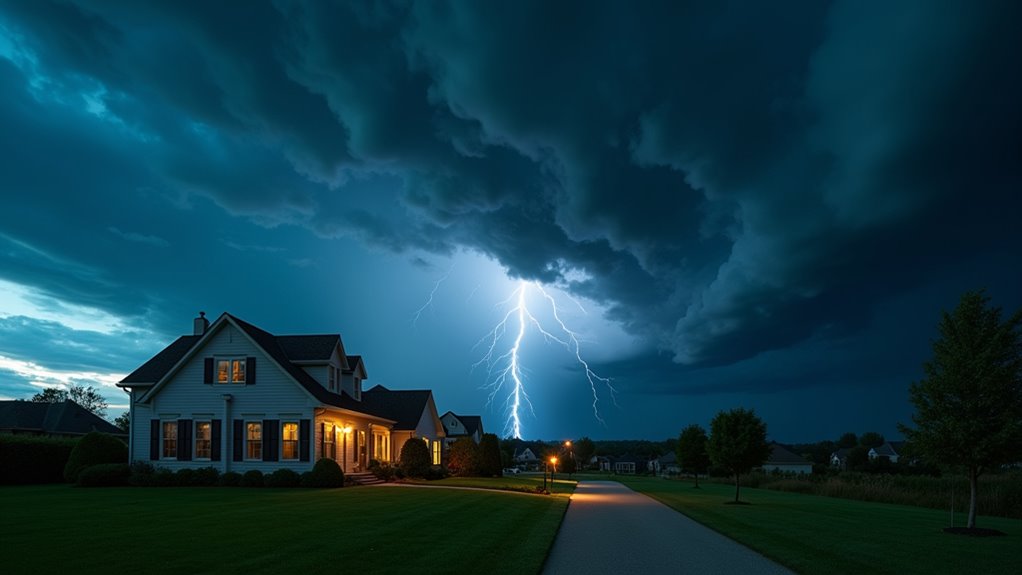
In a world where weather can turn from sunny to stormy in a heartbeat, insurance companies are scrambling to keep up. Extreme weather events are on the rise, thanks to climate change. And guess what? They’re not just sitting on their hands about it. A quarter of property and casualty insurers are already leveraging artificial intelligence to assess risks from severe storms. That’s right, AI is here to save the day—or at least it thinks it is.
Insurance companies are racing to adapt as extreme weather rises; AI is stepping in to assess storm risks like a superhero.
But it doesn’t stop at storms. Eighteen percent of insurers are turning to AI models for evaluating wildfire risks. This is not just a trend; it’s a necessity. The frequency and severity of these events have executives buzzing. A whopping 80% believe that AI opens new doors for profitable growth. Who wouldn’t want that?
But let’s be real: AI isn’t just about profits. It’s about survival in an unpredictable world. Over 73% of insurance executives agree that AI models are essential for managing the chaos that nature throws at us. AI processes vast amounts of real-time statistics for enhanced risk assessments, allowing insurers to make better-informed decisions. The increasing frequency of catastrophic events is prompting a search for better risk management solutions.
When disaster strikes, AI steps up its game in claims management. Automating claims processes? Yes, please! This tech reduces errors and delays, making things a bit smoother for everyone involved. Virtual AI adjusters are like superheroes swooping in to assess claim damages in real-time. Talk about efficiency! By 2030, McKinsey predicts over half of claims activities could be automated. That’s a lot of time saved—up to 20%, in fact. AI photo estimates now provide damage assessments within 24 hours for 78% of claims, a dramatic improvement over traditional methods.
And what about fraud? AI is busy cross-referencing claims with climate and satellite data to keep the dishonest at bay. No more sneaky claims trying to cash in on a storm that never even happened. AI’s got eyes everywhere, detecting anomalies and suspicious patterns. This means lower costs for those who play by the rules.
Now, let’s not ignore the consumers. Transparency is key. Sixty-four percent demand it in AI-based claims processing after severe weather. Yet, only 28% believe AI really boosts efficiency. It’s a tough crowd. Many still want a human to inspect the damages, thank you very much.
It’s clear that while AI is making waves in the insurance world, trust isn’t guaranteed. In this wild, unpredictable weather landscape, AI is a risky bet. But hey, it’s better than rolling the dice and hoping for the best, right?